Latest Publications
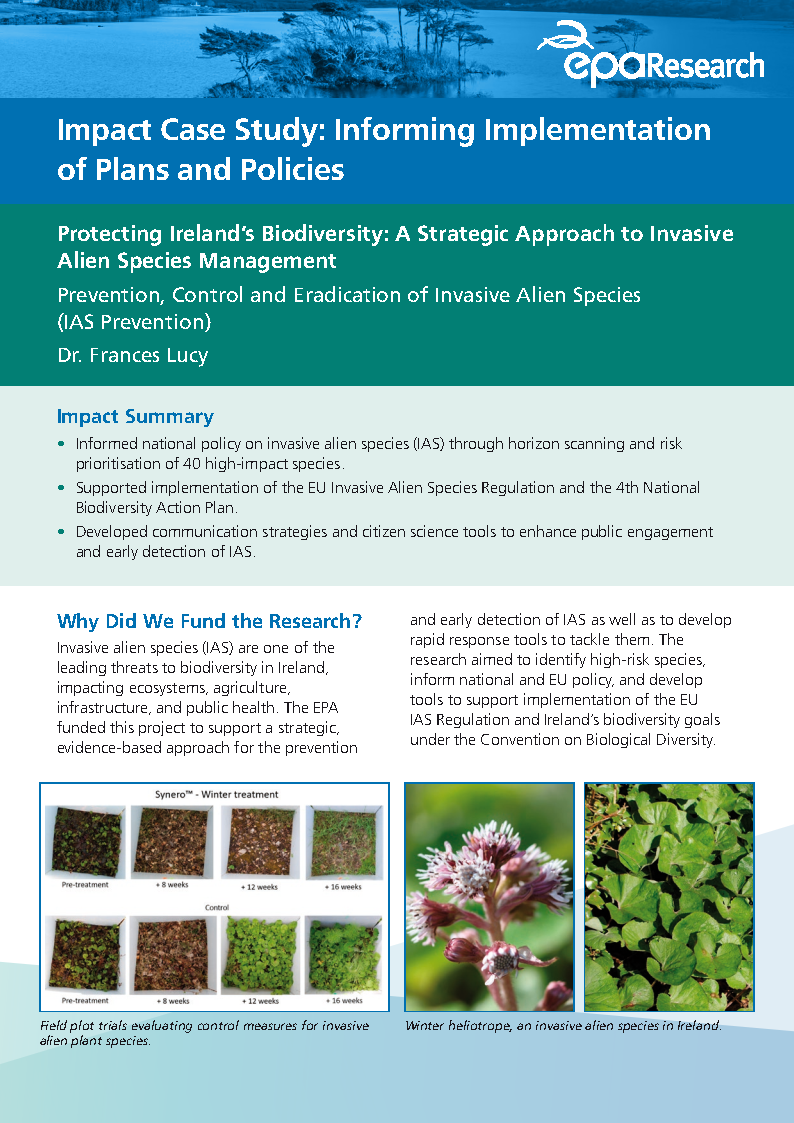
EPA Research Impact Case Study: IAS Prevention
Year: 2026
EPA Research 2030 is designed to be agile, responsive, and flexible, and aims to deliver timely and impactful research to support policy and decision making, and to address knowledge gaps in existing and emerging environmental pressures. The EPA Research Impact Case Studies provide examples and insights from EPA-funded projects and the impact they have achieved.
Integrated Biodiversity Impact Assessment
Year: 2026
Step-by-step guidance on integrating processes for biodiversity impact assessment.
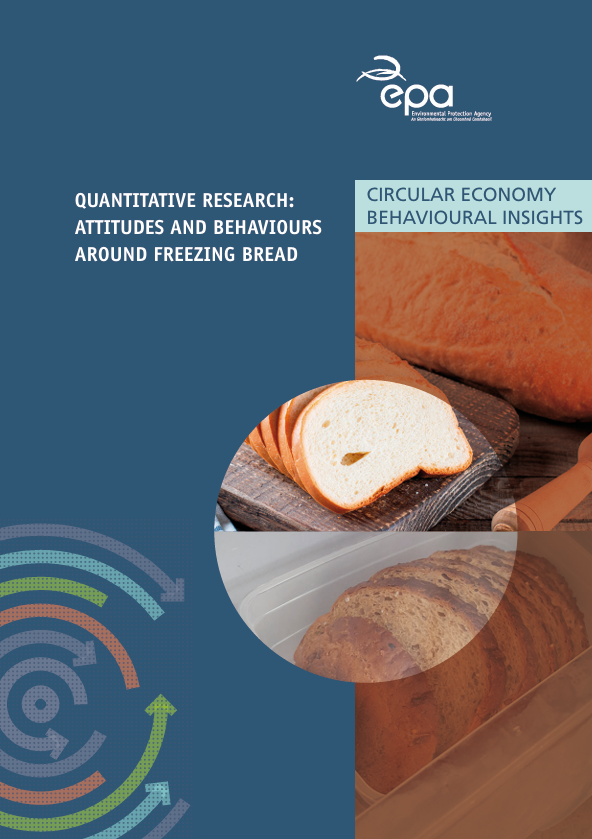
Quantitative Research: Attitudes and Behaviours around Freezing Bread
Year: 2026
Report on findings from quantitative research on attitudes and behaviours around freezing bread. This nationally representative survey of 1,001 adults aged 16+ was conducted in January 2026, working with Ipsos B&A, to gain insight into the reasons behind bread waste, identify opportunities to help prevent it and to inform Stop Food Waste campaign messaging.
Dumping at Sea Register - November 2026
Year: 2026
List of Dumping at Sea Permits granted by the EPA.
Ardfinnan Audit Report 16/10/2026
Year: 2026
Report of an audit carried out at Ardfinnan Regional public drinking water supply, Co. Tipperary on 16/10/2026
Guidance for RPA applications
Year: 2026
This is a guidance document outlining the process for applying for approval to act as a radiation protection advisor in Ireland.
A Synthesis of Circular Economy Behavioural Insights 2022-2025 Report
Year: 2026
This report brings together evidence from multiple EPA behavioural insights research studies conducted with Ipsos B&A on circular economy attitudes and behaviours, identifying behavioural trends, barriers, motivators and opportunities for intervention (areas where consumers demonstrate engagement and some openness to circular behaviours).
Assessing the Impact of Ammonia Emissions to Air and Nitrogen Deposition from EPA licensable activities on European Sites
Year: 2026
This Instruction Note is to assist applicants/licensees in assessing the impact of ammonia emissions to air and nitrogen on European sites when preparing licence/licence review applications for industrial sites.
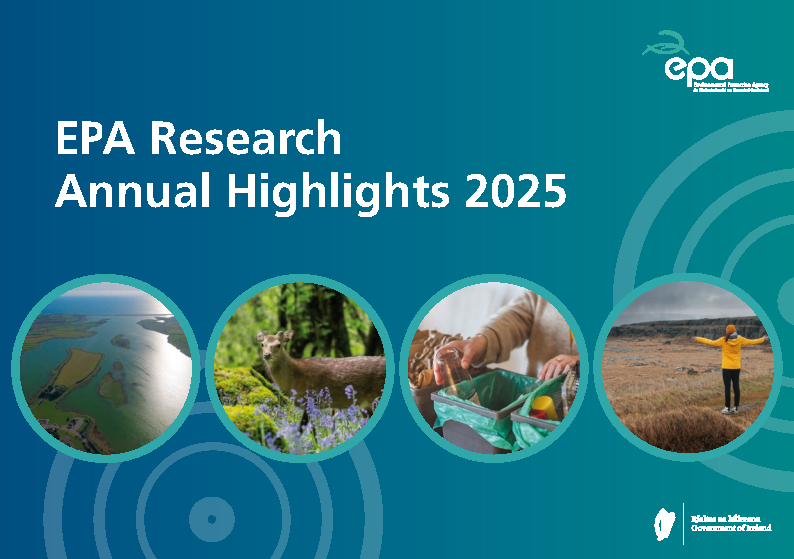
EPA Research Annual Highlights 2025
Authors: EPA, November 2026
Year: 2026
The Annual Highlights Report showcases the achievements, outputs and impacts of the EPA Research Programme and demonstrate progress in delivering the EPA Research 2030 Framework.
Guidance on Key Performance Indicators of Strategic Environmental Assessment Effectiveness
Year: 2026
Public Participation and Performance Criteria in Strategic Environmental Assessment: The Way Forward for Advancing Practice
Guidance Note on Public Participation in Strategic Environmental Assessment
Year: 2026
This guidance note aims to improve the general public’s engagement in strategic environmental assessment (SEA) practice in Ireland. It outlines principles and makes recommendations to ensure that the public are meaningfully informed and consulted during SEA processes.
Mirion Germany Dosimetry Service Approval Certificate
Year: 2026
Approval certificate for ADS approval for Mirion
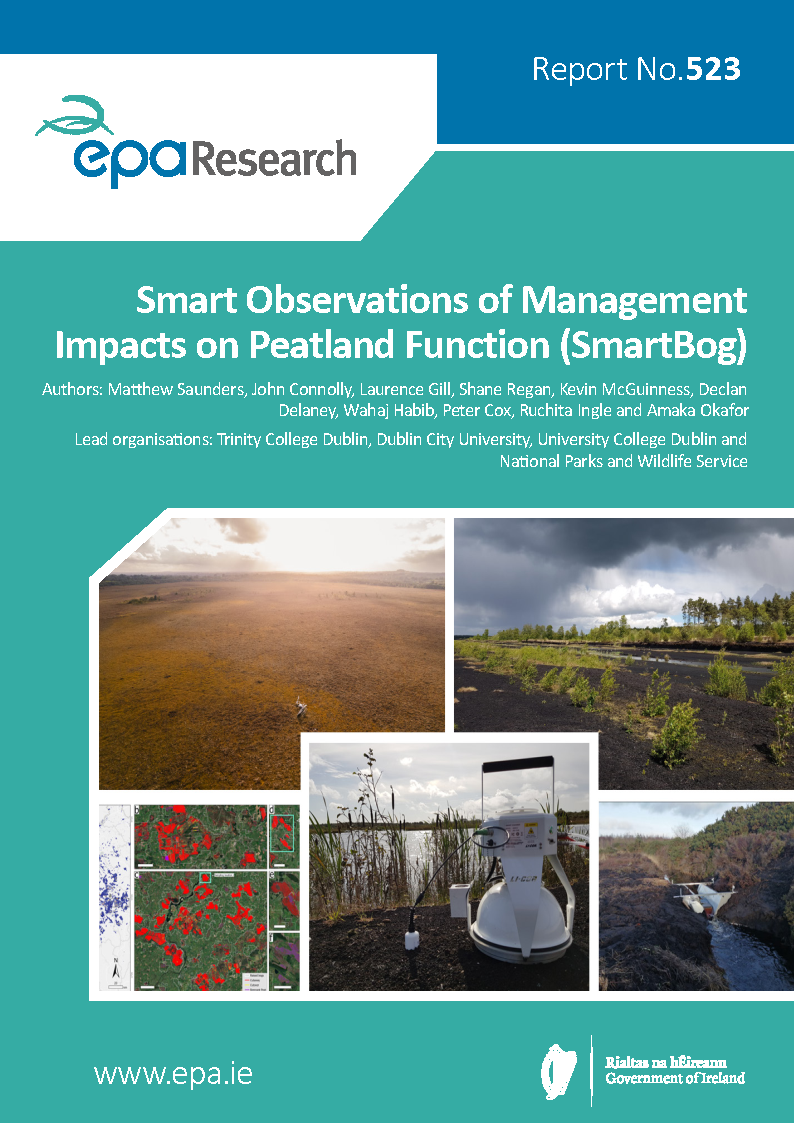
Research 523: Smart Observations of Management Impacts on Peatland Function (SmartBog)
Authors: Matthew Saunders, John Connolly, Laurence Gill, Shane Regan, Kevin McGuinness, Declan Delaney, Wahaj Habib, Peter Cox, Ruchita Ingle and Amaka Okafor, November 2026
Year: 2026
The SmartBog project led by TCD investigated how land use change, climate change and extreme weather affect Ireland’s raised peatlands and capacity to store carbon and reduce greenhouse gas (GHG) emissions. Using remote sensing, machine learning, field measurements and low-cost sensors, the project mapped peatland extent, condition, drainage status and habitat change. The research improves understanding of carbon and GHG emissions and the effectiveness of rewetting. The team developed a peatland land-use map and classification system. The map shows that emission estimates can vary radically depending on the method used. Results showed that peatlands are both vulnerable and resilient to climate variability, with hydrological conditions influencing whether they act as carbon sources or sinks. The findings support improved peatland assessment, GHG reporting, rehabilitation planning and climate mitigation policy, while highlighting the need for expanded monitoring and long-term studies.
Culdaff Audit 29/09/2026
Year: 2026
Report of an audit carried out at Culdaff public drinking water supply, Co. Donegal on 29/09/2026.
Rosses Regional Audit 18/08/2026
Year: 2026
Report of an audit carried out at Rosses Regional public drinking water supply, Co. Donegal on 18/08/2026.
Gortahork-Falcarragh Audit 18/08/2026
Year: 2026
Report of an audit carried out at Gortahork-Falcarragh public drinking water supply, Co. Donegal on 18/08/2026.
Westport Audit 28/07/2026
Year: 2026
Report of an audit carried out at Westport public drinking water supply, Co. Mayo on 28/07/2026.
Achill Audit 15/09/2026
Year: 2026
Report of an audit carried out at the Achill public drinking water supply, Co. Mayo on 15/09/2026.
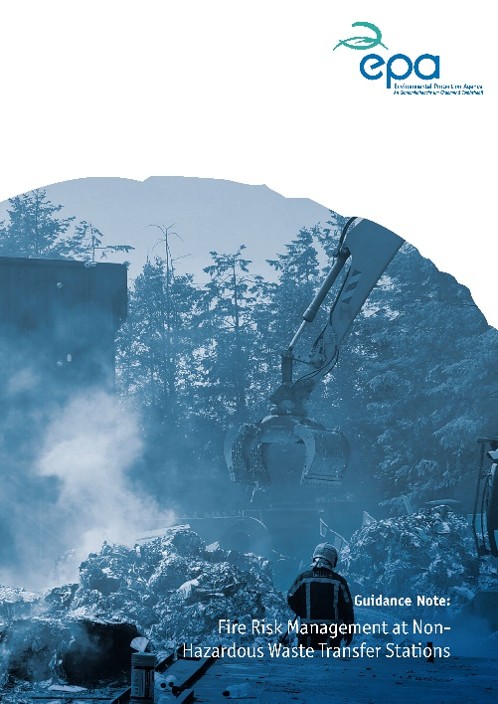
Fire Risk Management at Non-Hazardous Waste Transfer Stations
Year: 2026
The aim of this document is to provide guidance to licensees operating non-hazardous waste transfer stations licenced by the EPA in the management of fire risk, and particularly to those sites requiring the completion of a fire risk assessment as a condition of the licence. The matters and principles covered in this guidance are sufficiently broad in application to have relevance to other types of waste sites in the management of fire risk and the undertaking of fire risk assessments.