View our privacy statement for more information and how to manage them.
Drinking water from private wells is at risk of contamination. It is estimated that up to 30% of private wells may be contaminated occasionally with E. coli (an indicator of recent pollution by human or animal waste).
As private wells are not regulated, it is up to the well owner to arrange to have their well tested.
To ensure that your drinking water is safe you should get it tested. Test it preferably at least once a year for bacterial contamination and once every three years for chemical contamination, especially after heavy rain. Remember, a test can only tell you about the quality of the water at the time of the test - the quality may change at different times. If concerned arrange for a retest of your water.
At a minimum, test for E. coli and coliform Bacteria. The need for other tests depends on the location of your well and the appearance of your well water. For example, if your well is in an agricultural area you may need to get it tested for nitrate or if it is slightly discoloured you may want to get it tested for iron and manganese. You should consider testing the well if there is a vomiting or a diarrhoeal infection in the family. When making arrangements with the laboratory you should describe any concerns you have about your well water and they will be able to advise on what specific tests should be carried out.
A number of private laboratories are available to carry out the analysis. Your local authority Environment Section or Environmental Health Officer will be able to advise on a suitable laboratory. Alternatively, you can get the name of a suitable private laboratory from the Goldenpages.
These laboratories are offering a discount on the cost of analysis if you quote the promotional code 'EPA 2014' when arranging the testing. It is important to follow the instructions of the laboratory when taking and handling the water sample as this may affect the reliability of the results.
If test results indicate that your well is contaminated, you should take action to protect it. Also, if it is contaminated with infectious organisms (bugs, bacteria, germs), the water should be boiled until the well water is safe to drink.
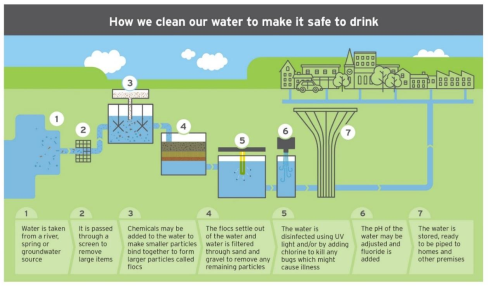
You may need to install some type of treatment if your well is located too close to a polluting activity or if the water is still contaminated after you have taken steps to protect the well. There is no “one size fits all” solution. The type of treatment depends on the quality of your well water. Remember that any treatment system must be properly maintained and operated to do its job properly, otherwise it could pose a health risk.
Below is a list of the main treatment types used in private wells:
The type of treatment suitable for your well depends on the results of appropriate testing. You can get a list of suppliers of water treatment systems in the Goldenpages. You should advise any potential suppliers of water treatment systems of these results so that they can advise you on the most suitable treatment for the problem.
Any treatment system installed must be maintained and operated in accordance with the manufacturers specifications or it may not do the job it is intended to do and could pose a risk to your health.
Alternatively you should check with Irish Water or your local group water scheme to see if you can connect to a nearby public or group water scheme.