Latest Evidence Synthesis reports
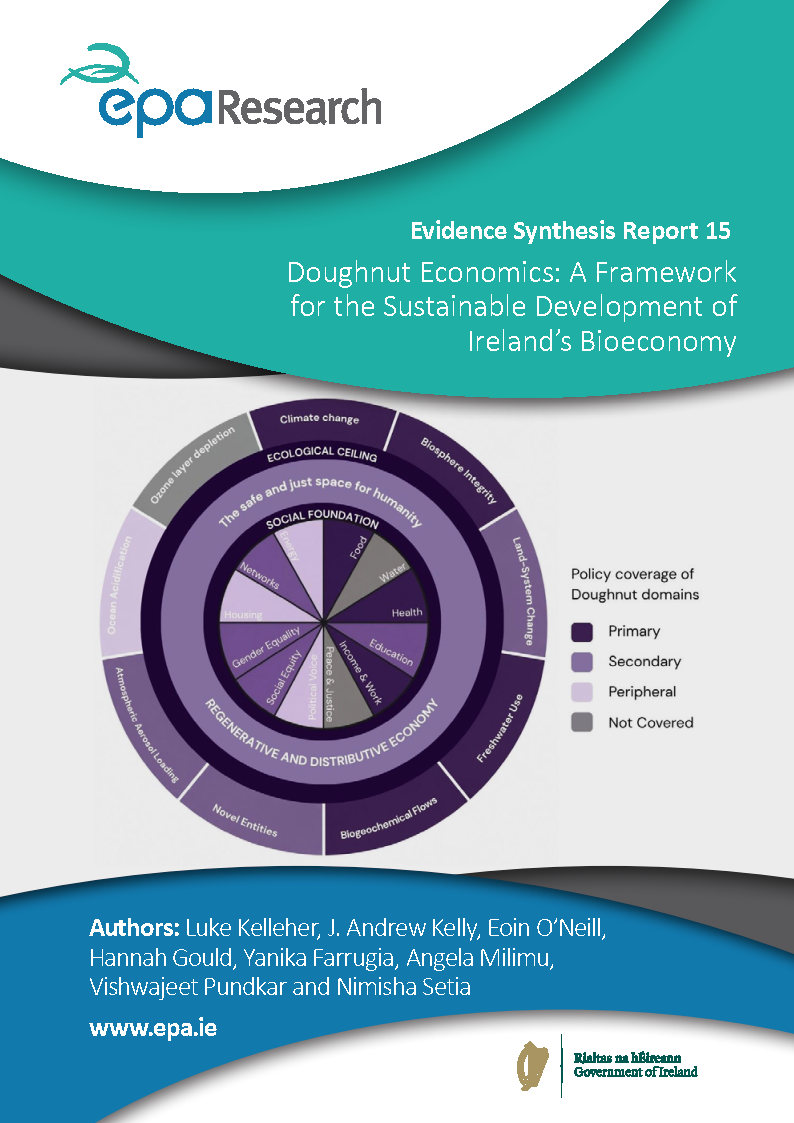
Evidence Synthesis Report 15: Doughnut Economics: A Framework for the Sustainable Development of Ireland’s Bioeconomy
Authors: Luke Kelleher, J. Andrew Kelly, Eoin O’Neill, Hannah Gould, Yanika Farrugia, Angela Milimu, Vishwajeet Pundkar and Nimisha Setia, October 2026
Year: 2026
This research study, led by EnvEcon Decision Support and University College Dublin examines the potential of the Doughnut Economics framework to support the sustainable development and monitoring of Ireland’s bioeconomy.
Evidence Synthesis Report 14: Impacts and Opportunities of the Clean Industrial Deal in Ireland
Authors: J. Andrew Kelly, J. Peter Clinch and Vishwajeet Pundkar, October 2026
Year: 2026
This research study, led by EnvEcon Decision Support, assesses the impact of the EU CID Clean Industrial Deal (CID) policy framework for Ireland, examining the alignment between EU-level policy objectives and Ireland’s industrial structure, competitive positioning and decarbonisation requirements.
Evidence Synthesis Report 13: Role of Public Lands in Delivering on the Government’s Objective of Improving Socioeconomic, Climate, Biodiversity and Water...
Authors: David Styles and Jill McGettigan, July 2026
Year: 2026
This report is one of a number of evidence synthesis reports funded by the EPA that are intended to support and inform the National Land Use Review. The second phase of the Land Use Review commenced in October 2023, being co-led by the Department of Climate, Energy and the Environment, the Department of Agriculture, Food and the Marine and the Department of Housing, Local Government and Heritage.
Evidence Synthesis Report 11: Optimising Land Use Outcomes: The Role of Private Finance
Thomas Ball, Ellen Cunningham, Emmet Lowry, James Kennedy and David O’Connor, July 2026
Year: 2026
This report is one of a number of evidence synthesis reports funded by the EPA that are intended to support and inform the National Land Use Review. The second phase of the Land Use Review commenced in October 2023, being co-led by the Department of Climate, Energy and the Environment, the Department of Agriculture, Food and the Marine and the Department of Housing, Local Government and Heritage.
Evidence Synthesis Report 12: Impediments to Agricultural Land Use Change and Interventions for Multifunctional Land Use Outcomes
Authors: Tracy Bradfield, Noreen Byrne and Miguel Tafula, July 2026
Year: 2026
This report is one of a number of evidence synthesis reports funded by the EPA that are intended to support and inform the National Land Use Review. The second phase of the Land Use Review commenced in October 2023, being co-led by the Department of Climate, Energy and the Environment, the Department of Agriculture, Food and the Marine and the Department of Housing, Local Government and Heritage.
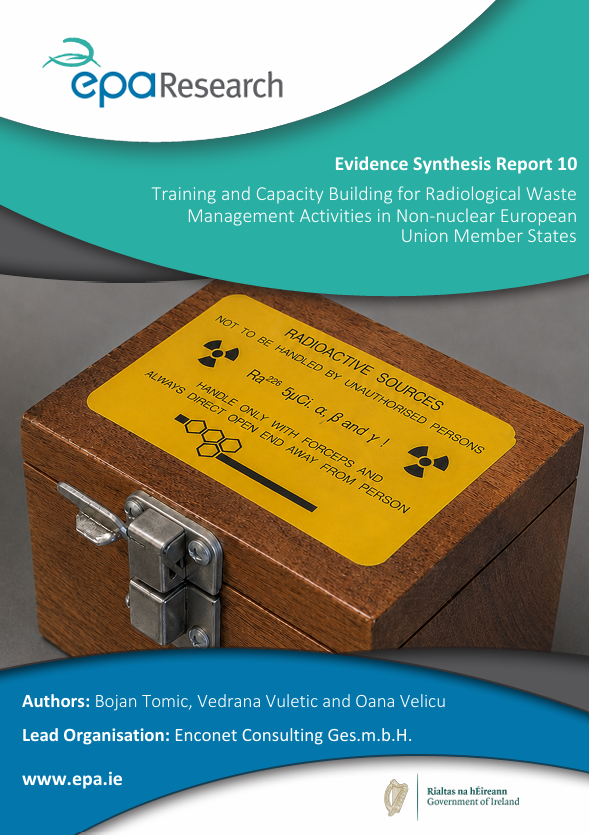
Evidence Synthesis Report 10: Training and Capacity Building for Radiological Waste Management Activities in Non-nuclear European Union Member States
Authors: Bojan Tomic, Vedrana Vuletic and Oana Velicu, June 2026
Year: 2026
This study, conducted by Enconet Consulting Ges.m.b.H, highlights the need for a coherent, long‑term national approach to developing and sustaining the skills required for effective radioactive‑waste management, reflecting challenges shared across non‑nuclear EU Member States.
Evidence Synthesis Report 9: Emissions for Non-Road Mobile Machinery
Authors: Rita Hagan, Eoin McGillicuddy and Aoife Donnell , April 2026
Year: 2026
Exploration of Best Practice of Market Surveillance and Type Approval of Internal Combustion Engines Emissions for Non-Road Mobile Machinery (EXAMINE_NRMM)
Evidence Synthesis Report 8: Ireland’s Urban Bioeconomy – Opportunities for Climate Action
Authors: Sarah Zimmermann, Nicholas M. Holden and Claire Downey, February 2026
Year: 2026
This study, conducted by the The Rediscovery Centre, highlights opportunities for urban circular bioeconomy development to inform Ireland’s bioeconomy and climate policy updates and bioeconomy strategies.

Evidence Synthesis Report 7: Investigating the Likelihood of a Lough Neagh Bloom Scenario Happening in Ireland
Authors: Philip Taylor, Ezra Kitson, Linda May, Erica Zaja, Alice MacSporran, Zisis Gagkas, Sara Trojahn and Miriam Glendell , June 2025
Year: 2025
This study, conducted by the UK Centre for Ecology & Hydrology and the James Hutton Institute, reviewed the factors that contributed to the harmful algal bloom (HAB) event in Lough Neagh.

Evidence Synthesis Report 6: Just Transition Indicator Framework for Ireland
Authors: J. Andrew Kelly, Ciaran Deegan, Amy Collins, Angela Milimu, Luke Kelleher and Yanika Farrugia, April 2025
Year: 2025
This research was carried out by EnvEcon Decision Support and provides guidance for Government on how to monitor and track success in ensuring a fair, inclusive and equitable transition to a low-carbon economy.

Evidence Synthesis Report 5: Study of the Increased Risk of Corrosion with the Use of Fatty Acid Methyl Ester (FAME) as a Diesel Additive
Authors: Carmel Breslin, Gillian Collins, Tara Barwa and Daniele Alves, March 2025
Year: 2025
Biofuels, including fatty acid methyl ester (FAME)-based biodiesels, have the potential to reduce greenhouse gas emissions from our transport sector. However, as these FAME-based biodiesels have become more common, challenges related to storage issues have emerged. FAME is not compatible with all materials, and corrosion issues have been reported during longer-term storage. This evidence synthesis research examines the properties of FAME-based biodiesels, the nature of corrosion reactions associated with these biofuels, the potential risk of corrosion and how to mitigate the risk. The report provides guidance on the general protocols to follow when managing and storing FAME-based biodiesels to mitigate corrosion risks.
Evidence Synthesis Report 4: Land Use Review: Fluxes, Scenarios and Capacity Synthesis Report
Authors: Eamon Haughey, David Styles, Matthew Saunders, Ruth Bennett Coady and James Moran, March 2023
Year: 2023
Land use in Ireland is dominated by grasslands, with significant areas of forestry and wetland, which are not distributed evenly across the country. Changes to Irelands climate have already been observed and are projected to increase over the coming decades, impacting the land system. AFOLU in Ireland is a substantial GHG source and achieving net-zero GHG emissions targets for the sector by 2050 will be very challenging. Measures considered in this report include afforestation, peatland restoration and optimised livestock production. Land based climate mitigation measures may result in trade-offs for biodiversity and water quality, the avoidance of which require an integrated approach to land management.
Evidence Synthesis Report 3: Land Use Review: Fluxes, Scenarios and Capacity
Authors: Eamon Haughey, David Styles, Matthew Saunders, Ruth Bennett Coady and James Moran, March 2023
Year: 2023
Land use in Ireland is dominated by grasslands, with significant areas of forestry and wetland, which are not distributed evenly across the country. Changes to Irelands climate have already been observed and are projected to increase over the coming decades, impacting the land system. AFOLU in Ireland is a substantial GHG source and achieving net-zero GHG emissions targets for the sector by 2050 will be very challenging. Measures considered in this report include afforestation, peatland restoration and optimised livestock production. Land based climate mitigation measures may result in trade-offs for biodiversity and water quality, the avoidance of which require an integrated approach to land management.
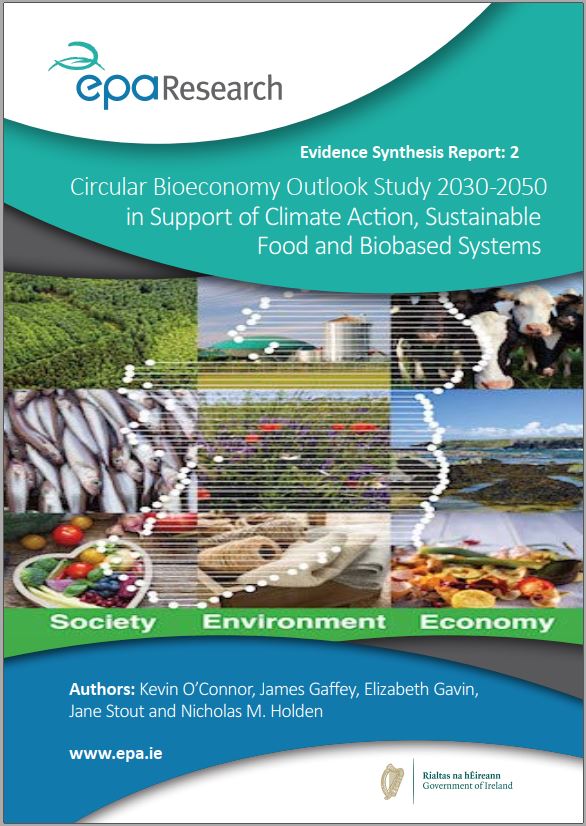
Evidence Synthesis Report 2: Circular Bioeconomy Outlook Study 2030–2050 in Support of Climate Action, Sustainable Food and Biobased Systems
Authors: Kevin O’Connor, James Gaffey, Elizabeth Gavin, Jane Stout and Nicholas M. Holden, February 2023
Year: 2023
This report provides an outlook for Ireland’s circular bioeconomy for the period 2030–2050, highlighting the potential to create economic, environmental and social opportunities for new biobased innovations.
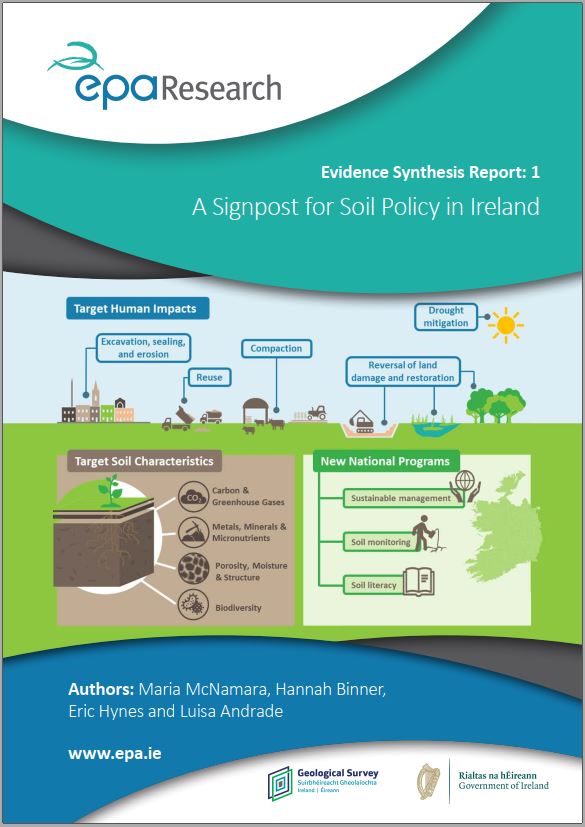
Evidence Synthesis Report 1: A Signpost for Soil Policy in Ireland
Authors: Maria McNamara, Hannah Binner, Eric Hynes and Luisa Andrade, June 2022
Year: 2022
This study aimed to generate an accessible evidence base to support the development of new policy on soil and to enable Ireland to meet its commitments to both national and EU soil strategies.
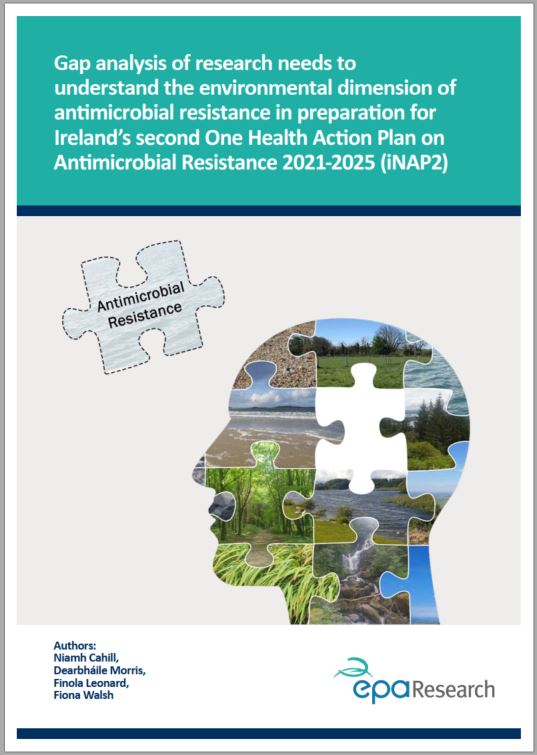
Gap analysis of research needs to understand the environmental dimension of antimicrobial resistance in preparation for iNAP2
Authors: Niamh Cahill, Dearbháile Morris, Finola Leonard, Fiona Walsh, December 2021
Year: 2021
Antimicrobial resistance (AMR) is one of the greatest global threats we are facing in today’s world. As recognised in Ireland’s first National Action Plan on Antimicrobial Resistance, adopting a One Health approach is key to effectively tackling the problem of AMR. A comprehensive analysis of previous and ongoing research relating to the occurrence, risk, fate and transport of antimicrobial residues and AMR to and within the environment was completed.
National Environmental Policies For the EPA State of Environment Report 2020
Authors: Tadhg Coakley and Eileen O’Leary, June 2021
Year: 2021
In the recently published EPA report, Ireland's Environment 2020 - An Assessment, the need for an overarching environmental policy for the country was identified. This report examines national environmental policies across a number of countries, as well as a review of other related policies at an EU and international level.
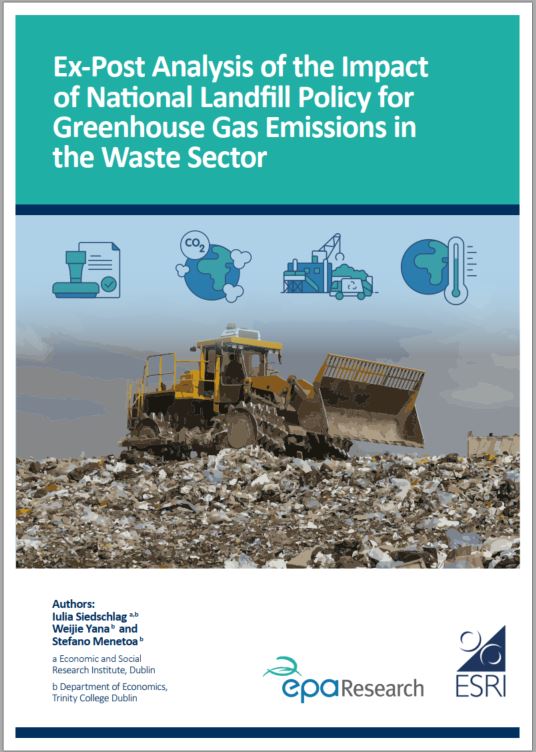
Ex-Post Analysis of the Impact of National Landfill Policy for Greenhouse Gas Emissions in the Waste Sector
Authors: Iulia Siedschlag, Weijie Yan and Stefano Meneto, March 2021
Year: 2021
This research examines the impact of Ireland’s landfill policy on greenhouse gas emissions from the waste sector over the past three decades. The analysis focuses on direct methane emissions emanating from the municipal solid waste disposed to landfill sites in Ireland over the period 1990-2018.
Environmental impacts (positive and negative) flowing from COVID-19 and related measures
Authors: Eileen O’Leary, Safaa Al Tameemi, Sarah Broderick and Colman McCarthy, August 2020
Year: 2020
This report presents the findings from a small-scale research study on the main environment-related impacts arising from the COVID-19 experience in Ireland, both positive and negative. While focused primarily on the environmental effects, related effects such as changes in consumption, which have knock-on environmental impacts are also included.
Covid-19 and Sheer Wellbeing 2020 - Access to and Use of Blue/Green Spaces in Ireland during a Pandemic
Authors: Gesche Kindermann, Christine Domegan and Sinead Duane, August 2020
Year: 2020
This Small-Scale Study looked at the access to and use of blue/green spaces in Ireland during a Pandemic. This report builds upon and extends Our Environment, Our Health, Our Wellbeing: Access to Blue/Green Spaces and Water Quality in Ireland (2017-HW-MS-12).