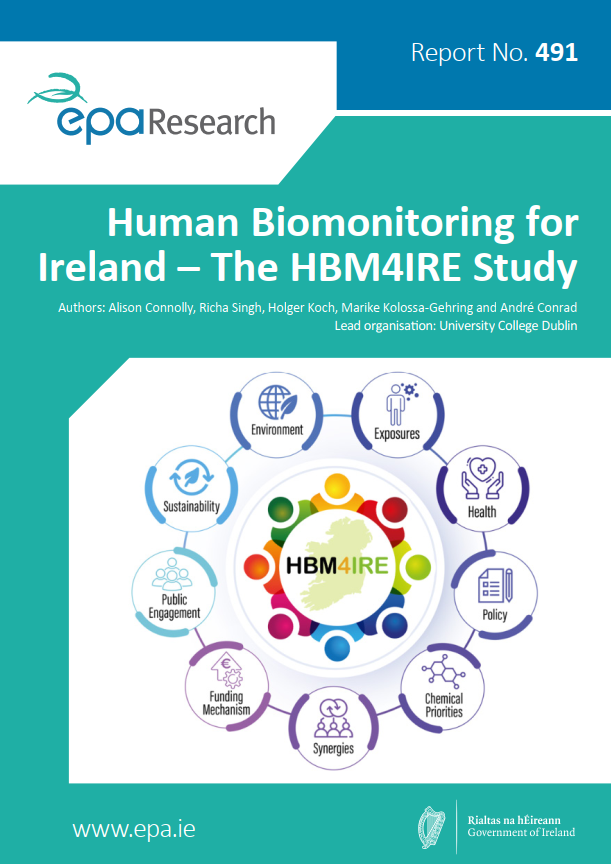
Research 491: Human Biomonitoring for Ireland – The HBM4IRE Study
Authors: Alison Connolly, Richa Singh, Holger Koch, Marike Kolossa-Gehring and André Conrad
Summary: The Human Biomonitoring for Ireland (HBM4IRE) project assessed the feasibility of establishing a national Human Biomonitoring (HBM) programme in Ireland to better understand cumulative chemical exposure from various sources. Despite EU regulations, concerns remain about long-term health impacts, and HBM offers a more accurate method of measuring human exposure through biological samples. The study confirmed Ireland’s capacity to implement such a programme, aligning with EU initiatives like the Green Deal and Zero Pollution Action Plan. Key outcomes include Ireland’s first priority chemical list, a proposed governance framework involving agencies like the EPA and HSE, and recommendations for stakeholder engagement, data transparency, and sustained funding. The findings support evidence-based policymaking, improved public health protections, and international collaboration. HBM4IRE also provides a roadmap for future efforts, including addressing.
Project highlights video
What did this research aim to address?
People are regularly exposed to chemicals through air, water, food, consumer products, and their surrounding environment. Despite stringent EU regulations, concerns about the cumulative impact of chemical exposure persist. Effective monitoring is crucial for assessing the extent of human exposure and evaluating the effectiveness of existing policies.
The HBM4IRE project aims to bridge this gap by assessing the feasibility of establishing a national Human Biomonitoring (HBM) programme in Ireland. HBM is a powerful tool that measures chemicals in biological samples (e.g. blood, urine), providing data on actual human exposure levels from all sources and pathways and offering a more comprehensive risk assessment approach.
This research is crucial for policymakers, regulatory agencies, and public health authorities, as it supports evidence-based decision making on chemical safety. HBM4IRE plays a key role in aligning Ireland with European initiatives, including the EU Green Deal, the Chemicals Strategy for Sustainability, and the Zero Pollution Action Plan. HBM4IRE adopts an innovative, multi-stakeholder approach, aligning with EU-wide initiatives while tailoring its methodologies to Ireland’s specific needs.
What did this research find?
The HBM4IRE project confirmed that Ireland has the capacity to establish a national Human Biomonitoring (HBM) programme, aligning with EU policies like the Green Deal and Zero Pollution Action Plan. The study produced Ireland’s first HBM priority chemical list and proposed a cross-sectoral governance framework involving agencies such as the EPA, HSE, and HSA and concerned ministries. Key Findings:
• Feasibility has been confirmed, as comparable nations, such as Slovenia and Iceland, have national HBM programmes.
• Stakeholder engagement is crucial, with scientific experts, policymakers, regulators and the public emphasising co-creation and data transparency
• HBM data will strengthen risk assessments, inform regulations, and identify vulnerable groups.
• Ireland can leverage EU-wide initiatives, such as PARC and the WHO HBM Working Group, for expertise and data comparability.
• Sustained funding and policy commitment are essential for success.
• Data-sharing and public trust need to be carefully managed.
HBM4IRE provides a solid foundation for an Irish HBM programme, ensuring evidence-based policymaking, enhanced public health protections, and integration with European biomonitoring efforts. Now is the opportune time for Ireland to act and establish this critical initiative.
How can the research findings be used?
HBM4IRE outlines a comprehensive framework for establishing a national Human Biomonitoring (HBM) programme in Ireland. Study recommendations include the creation of a National HBM Steering Committee, composed of stakeholders from various sectors (e.g., EPA, HSE, HSA, academic/research institutions), to coordinate and oversee the programme’s development and ensure that priorities align with chemical safety regulations and public health objectives. Study recommendations also provide the first chemical and biomarker priority list for Ireland for an HBM programme. Additionally, securing long-term funding and leveraging international collaborations, such as the Partnership for the Assessment of Risks from Chemicals (PARC) and WHO HBM Working Group, will be critical for the success and sustainability of the programme.
The study aims to achieve significant environmental outcomes by providing robust data on environmental chemical exposures. This data can guide policy decisions regarding chemical safety, occupational health, and environmental regulations and support the development of evidence-based policies and initiatives aimed at reducing chemical risk. Furthermore, the study’s outputs will contribute to raising awareness of chemical safety among the general public. Future ambitions will include addressing emerging contaminants, longitudinal exposure trends, and vulnerable subgroups to enhance the programme’s effectiveness.
https://www.epa.ie/media/epa-2020/research/research-publications/Cover-491.png