Latest Research reports
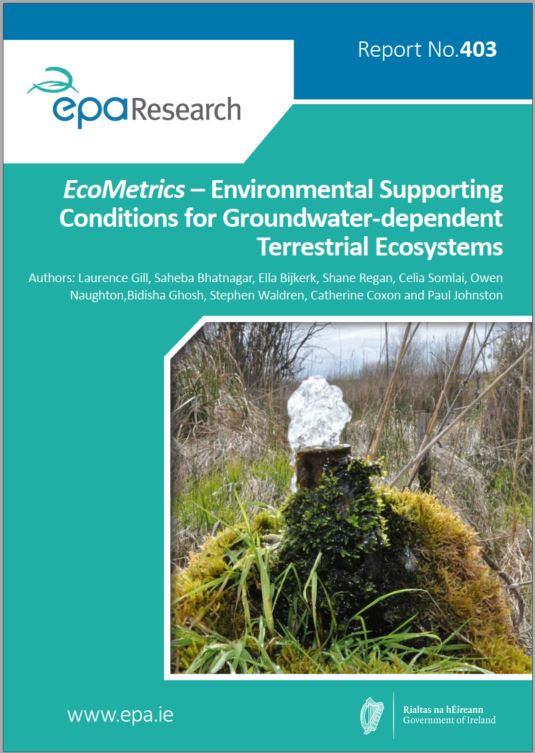
Research 403: EcoMetrics – Environmental Supporting Conditions for Groundwater-dependent Terrestrial Ecosystems
Authors: Laurence Gill, Saheba Bhatnagar, Ella Bijkerk, Shane Regan, Celia Somlai, Owen Naughton, Bidisha Ghosh, Stephen Waldren, Catherine Coxon and Paul Johnston, February 2022
Year: 2022
Wetlands provide important regulating ecosystem services, such as water purification, carbon capture and storage, and flood protection. They also provide rich habitats for biodiversity, including many protected species. This research project evaluated and developed methods for the assessment and definition of appropriate ecohydrological metrics to help policymakers conserve and/or restore wetlands, particularly with respect to meeting the objectives of the Water Framework Directive and Habitats Directive as applied to GWDTEs in Ireland.
Research 402: Climate Change Adaptation: Risks and Opportunities for Irish Businesses
Authors: Karen Deignan, Aideen O’Hora, Orlaith Delargy, Laura Heuston and Conor Morrow, February 2022
Year: 2022
Climate change is already affecting Irish businesses and these impacts are likely to increase in severity. Our research identified material climate risks (pressures) for Ireland’s private sector. By raising awareness of climate risks and opportunities, this research can help the private sector identify and develop solutions to address the environmental and economic challenges that they face. This project can also inform the development of solutions to develop business-level (rather than sector-level) resilience and adaptation plans.
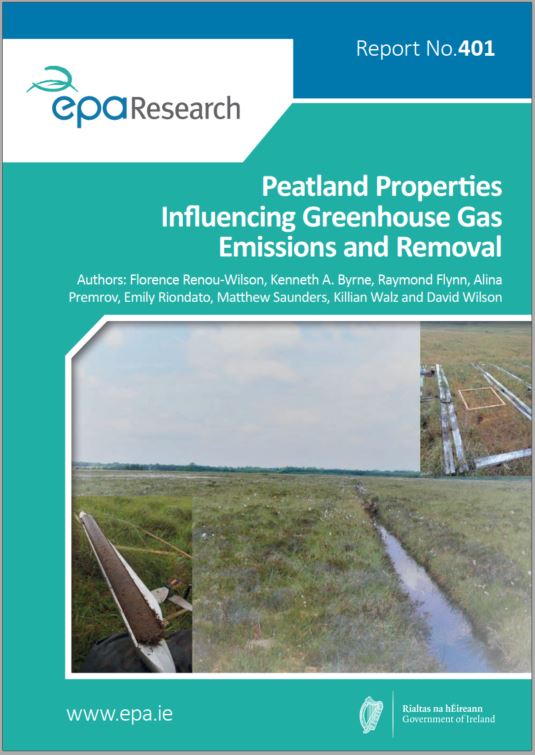
Research 401: Peatland Properties Influencing Greenhouse Gas Emissions and Removal
Authors: Florence Renou-Wilson, Kenneth A. Byrne, Raymond Flynn, Alina Premrov, Emily Riondato, Matthew Saunders, Killian Walz and David Wilson, January 2022
Year: 2022
Irish bogs have been drastically altered by human activities and the sampled peat properties reflect the nature and magnitude of the impact of land use and management. A recognition of the heterogeneity found across Irish peat soils, together with an understanding of the relationships between key soil properties, are critical for developing effective strategies to reduce the carbon footprint of these degraded ecosystems. Our findings clearly support the need for a site-by-site approach for rewetting management schemes.
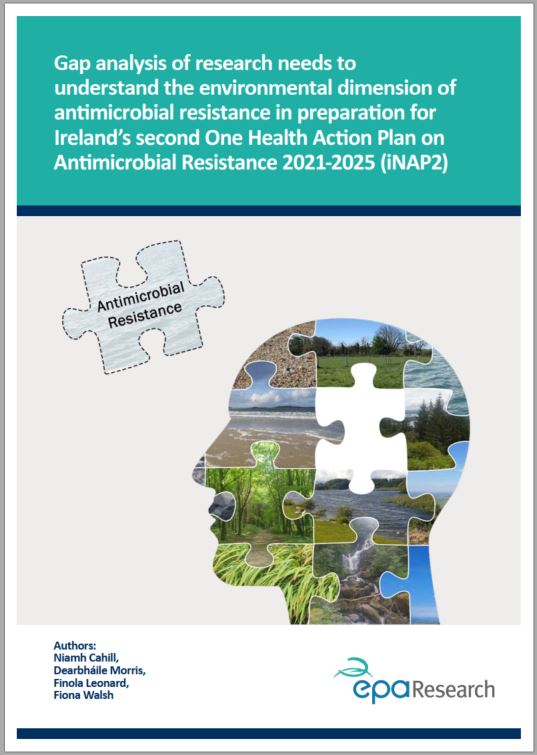
Gap analysis of research needs to understand the environmental dimension of antimicrobial resistance in preparation for iNAP2
Authors: Niamh Cahill, Dearbháile Morris, Finola Leonard, Fiona Walsh, December 2021
Year: 2021
Antimicrobial resistance (AMR) is one of the greatest global threats we are facing in today’s world. As recognised in Ireland’s first National Action Plan on Antimicrobial Resistance, adopting a One Health approach is key to effectively tackling the problem of AMR. A comprehensive analysis of previous and ongoing research relating to the occurrence, risk, fate and transport of antimicrobial residues and AMR to and within the environment was completed.
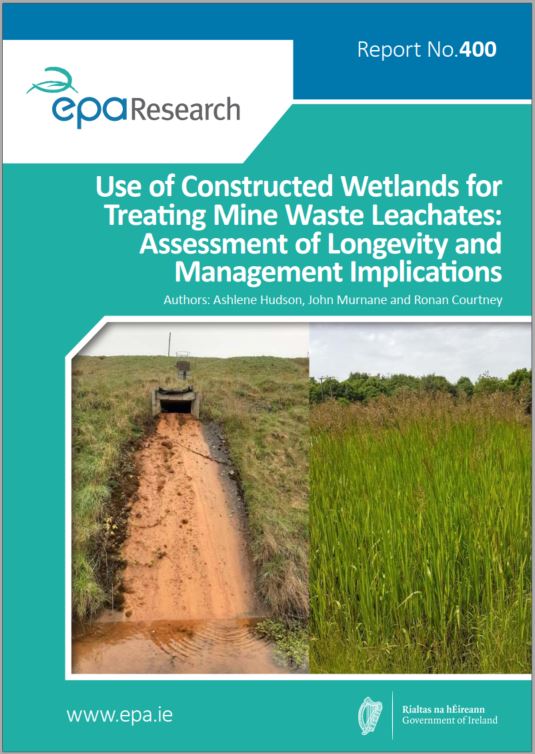
Research 400: Use of Constructed Wetlands for Treating Mine Waste Leachates: Assessment of Longevity and Management Implications
Authors: Ashlene Hudson, John Murnane and Ronan Courtney, December 2021
Year: 2021
Mine waste storage facilities can generate significant quantities of wastewaters and leachates with extreme pH and elevated metal contents. Modern mine waste (tailings) facilities operating under licence from the EPA have constructed wetlands as a component of their Integrated Pollution Control (IPC) licences. This study provides evidence of the effectiveness of constructed wetlands for treating mine waters from different settings over time frames of several years.
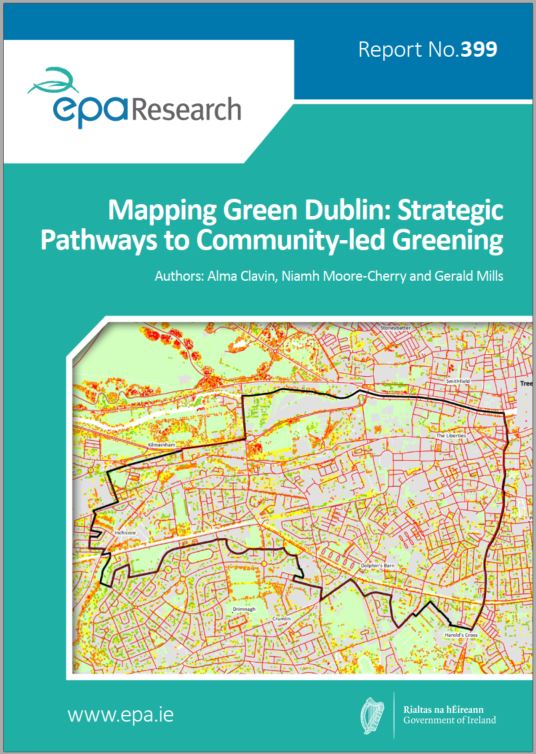
Research 399: Mapping Green Dublin: Strategic Pathways to Community-led Greening
Authors: Alma Clavin, Niamh Moore-Cherry and Gerald Mills, December 2021
Year: 2021
Enhancing green infrastructure in densely populated centres is an important means of improving urban environments, with benefits for air and water quality, as well as biodiversity enhancement. The project Mapping Green Dublin examined the variable green cover in the Dublin City Council area. It has generated data on the city’s trees, identified those places with significant environmental deficiencies and worked with the local community to develop a greening strategy for the Dublin 8 area. Mapping Green Dublin has established a process for effective engagement with neighbourhoods that allows residents to be participants in the design of their own spaces.
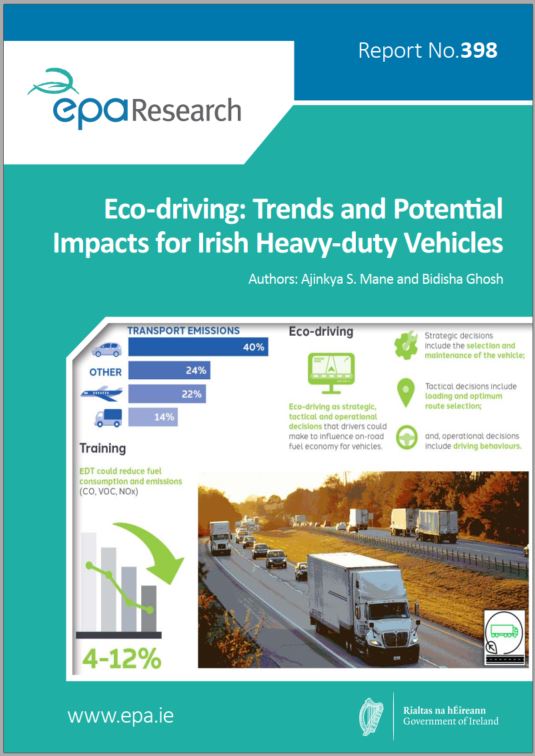
Research 398: Eco-driving: Trends and Potential Impacts for Irish Heavy-duty Vehicles
Authors: Ajinkya S. Mane and Bidisha Ghosh, December 2021
Year: 2021
The “Eco-HDV” research project evaluated the impacts of adaptation of eco-driving programmes in the Irish heavy-duty vehicle fleet, focusing especially on the freight sector. The research identified perceptions and awareness of eco-driving training, reviewed the best eco-driving practices and analysed the possibilities of adaptation of eco-driving programmes. The project generated guidelines for the implementation of eco-driving programmes and other measures to reduce vehicular emissions from the Irish heavy-duty vehicle fleet.
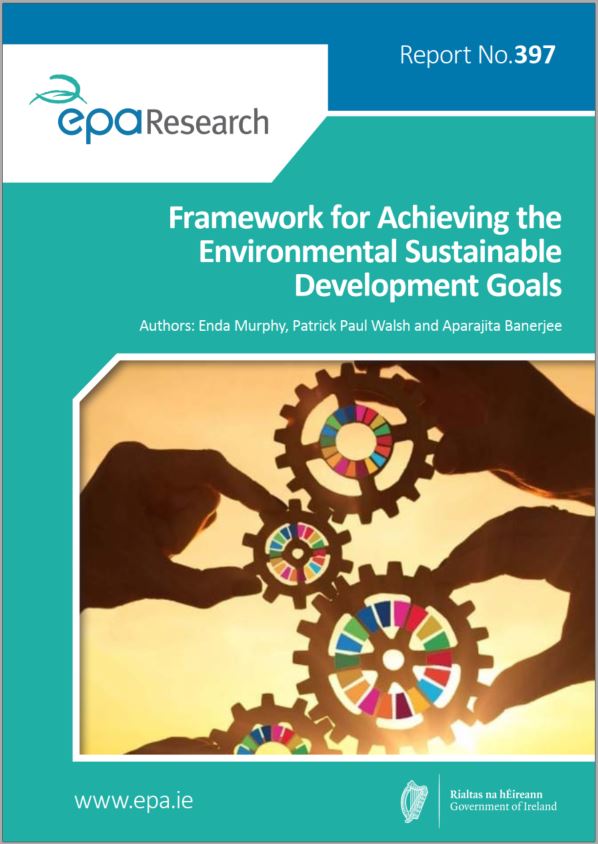
Research 397: Framework for Achieving the Environmental Sustainable Development Goals
Authors: Enda Murphy, Patrick Paul Walsh and Aparajita Banerjee, December 2021
Year: 2021
This report contributes to a range of international and national policy areas, creating a positive feedback loop between policies for environmental SDG promotion, governance for the SDGs and integrated environmental policymaking. It provides an important evidence base for assessing national progress on the environmental SDGs relative to EU peer nations. This is the first time that Ireland’s progress on the SDGs has been assessed on an SDG target and indicator basis relative to peer nations.
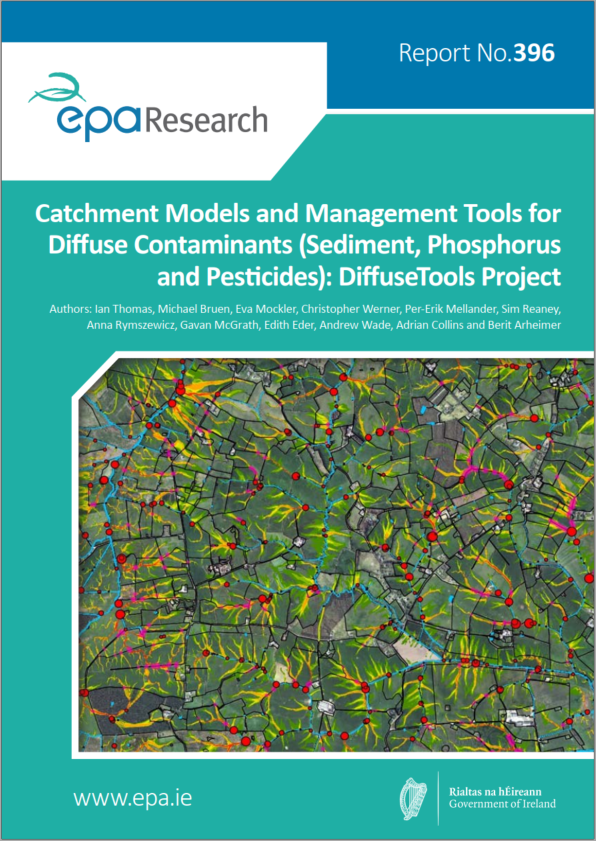
Research 396: Catchment Models and Management Tools for Diffuse Contaminants (Sediment, Phosphorus and Pesticides): DiffuseTools Project
Authors: Ian Thomas, Michael Bruen, Eva Mockler, Christopher Werner, Per-Erik Mellander, Sim Reaney, Anna Rymszewicz, Gavan McGrath, Edith Eder, Andrew Wade, Adrian Collins and Berit Arheimer, November 2021
Year: 2021
Eutrophication, often driven by phosphorus, is the most significant issue for inland surface waters in Ireland. Half of Irish river water bodies still require improvements to bring them to good status, as required by the Water Framework Directive (WFD) (2000/60/EC). This research contributes to Ireland’s response to the third River Basin Management Plan of the WFD and to the development and implementation of more sustainable and cost-effective agricultural policies.
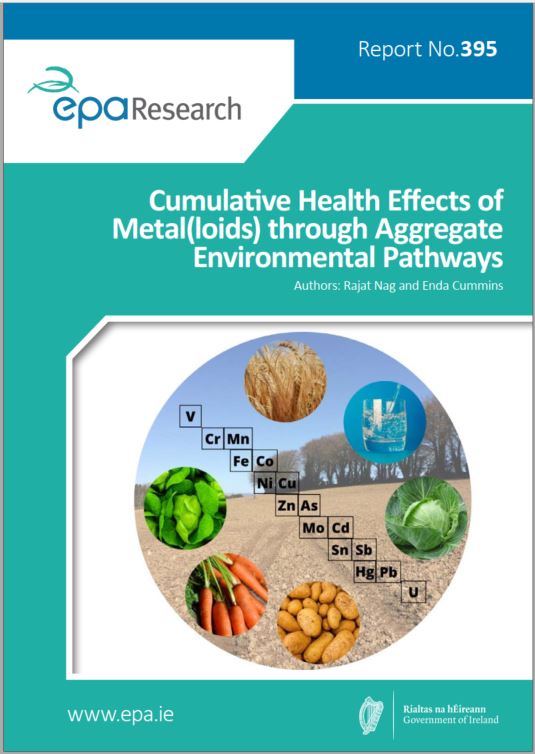
Research 395: Cumulative Health Effects of Metal(loids) through Aggregate Environmental Pathways
Authors: Rajat Nag and Enda Cummins, November 2021
Year: 2021
Background levels of metal(loid)s coupled with anthropogenic sources may lead to increased levels of certain metal(loid)s in soil, leading to potential uptake by plants. This study develops a source–pathway–receptor conceptual model for metal(loid)s in environmental media. The study presents an approach that can be extended to further evaluate pollutants and their environment–health interactions.
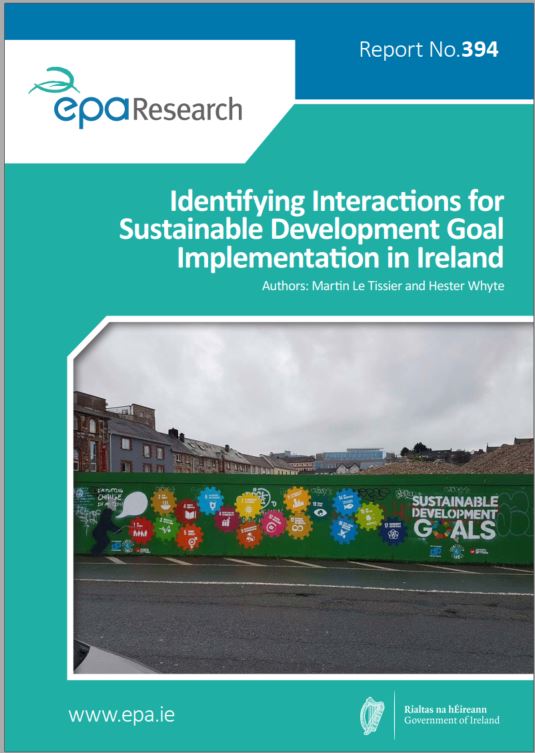
Research 394: Identifying Interactions for Sustainable Development Goal Implementation in Ireland
Authors: Martin Le Tissier and Hester Whyte, October 2021
Year: 2021
This report addresses how understanding of interlinkages between the Sustainable Development Goals (SDGs) of the United Nations Agenda 2030 and Ireland’s policy portfolio can advance understanding to meeting SDG targets and a “whole-of-government” approach to policy implementation.
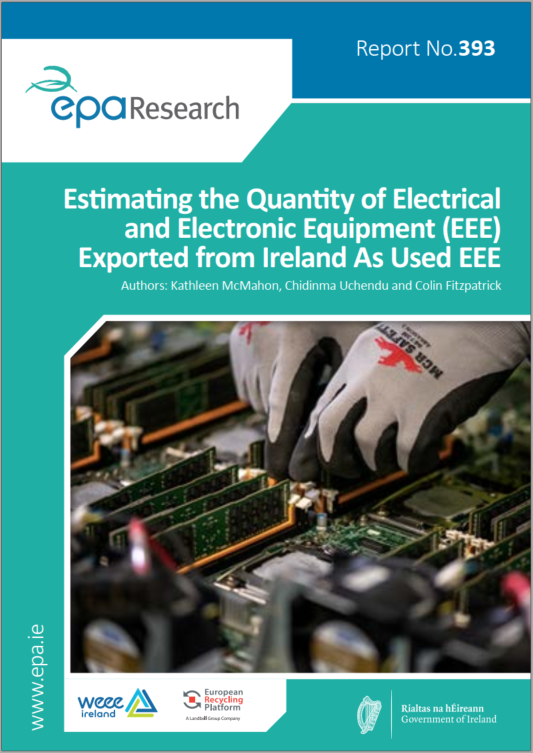
Research 393: Estimating the Quantity of Electrical and Electronic Equipment (EEE) Exported from Ireland As Used EEE
Authors: Kathleen McMahon, Chidinma Uchendu and Colin Fitzpatrick, October 2021
Year: 2021
Ireland has met or exceeded collection and recovery targets for waste electrical and electronic equipment (WEEE) in recent years. However, as targets have risen, Ireland’s stakeholders must identify and address challenges presented by WEEE that does not arise in collection. This research identifies two pathways by which UEEE is exported for the purpose of reuse, namely through the shipment of roll-on roll-off vehicles and through the shipment of professional IT equipment, and it aims to quantify the amount of UEEE exported through each pathway.
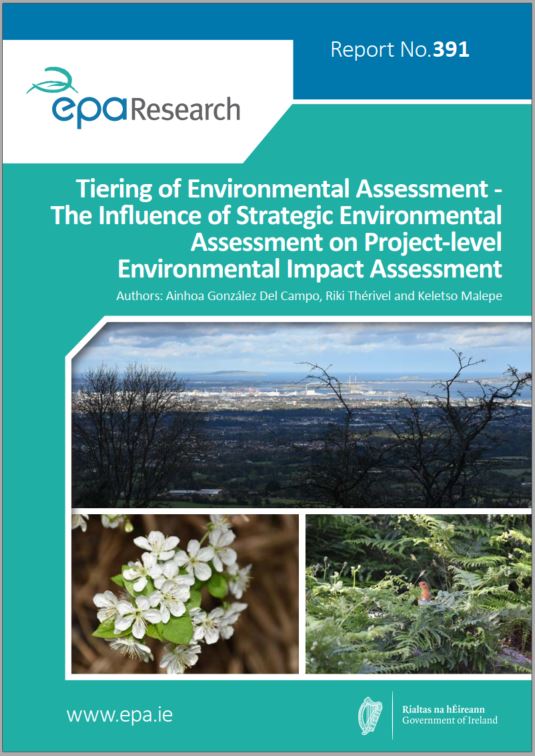
Research 391: Tiering of Environmental Assessment – The Influence of Strategic Environmental Assessment on Project-level Environmental Impact Assessment
Authors: Ainhoa González Del Campo, Riki Thérivel and Keletso Malepe, September 2021
Year: 2021
Strategic Environmental Assessments (SEAs) aim to identify and mitigate environmental impacts resulting from the implementation of plans and programmes before they are adopted. This research was based on a literature review, interviews with 28 international and Irish experts, and a review of 19 Irish case studies. The research identified a range of good practice approaches to impact assessment tiering, which can be summarised as better communication between SEA and EIA practitioners.
Research 392: Guidance on Strategic Environmental Assessment–Environmental Impact Assessment Tiering
Authors: Riki Thérivel and Ainhoa González Del Campo, September 2021
Year: 2021
This Guidance on SEA-EIA Tiering aims to improve the links between SEA and EIA, using a range of good practice examples. It focuses on improving communication between SEA and EIA: getting SEA practitioners to write SEAs with EIAs in mind, and EIA practitioners to refer to SEAs in their EIA Reports. It also identifies institutional issues that can set a context which restricts tiering, including ‘silo assessment’, lack of training, and restrictive legal requirements.
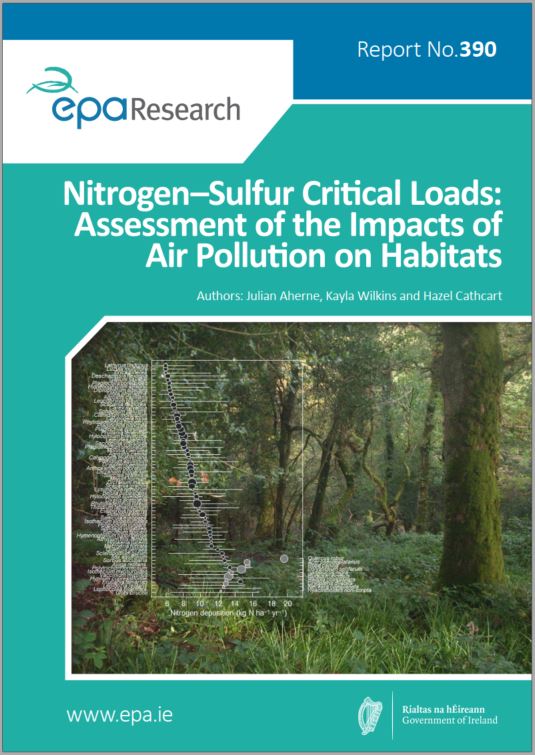
Research 390: Nitrogen–Sulfur Critical Loads: Assessment of the Impacts of Air Pollution on Habitats
Authors: Julian Aherne, Kayla Wilkins and Hazel Cathcart, September 2021
Year: 2021
Air pollution can have unacceptable impacts on the natural environment. In particular, elevated atmospheric nitrogen deposition can result in changes to the plant communities of natural and seminatural ecosystems, resulting in decreases in plant biodiversity. This project developed empirical critical loads of nutrient nitrogen for 17 Annex I habitats. The project analysis suggests that habitats within the Atlantic biogeographic region have critical loads at the low end or lower than existing UNECE recommended ranges for European habitats.
Research 389: Evaluating the Multiple Values of Nature – ESDecide: from an Ecosystem Services Framework to Application for Integrated Freshwater Resources Manag
Authors: Mike Christie, Jasper Kenter, Craig Bullock, Michael Bruen, Marcin Penk, Christian Feld and Mary Kelly-Quinn, August 2021
Year: 2021
The Water Framework Directive requires the EPA to monitor the quality of water in Ireland’s rivers and lakes. This research reviewed the multiple values and benefits of nature, often termed ‘ecosystem services’ or’ nature’s contributions to people (NCPs)’. It provides insights into the multiple ways people value rivers and associated ecosystem services/ NCPs. The research also developed a decision support tool to assess the impacts on ecosystem services/NCPs of alternative river catchment measures.
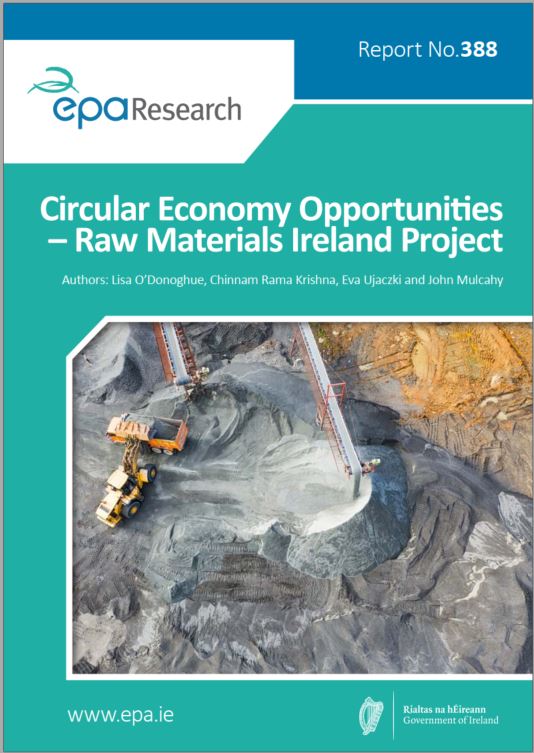
Research 388: Circular Economy Opportunities – Raw Materials Ireland Project
Authors: Lisa O’Donoghue, Chinnam Rama Krishna, Eva Ujaczki and John Mulcahy, August 2021
Year: 2021
Ireland is home to primary industries in mining, materials processing and power generation. Today, most waste outputs associated with these industries are either sent for disposal or exported. The research focused on techniques for mechanical and physical separation, to unlock valuable materials such as iron, aluminium, calcium and critical raw materials (gallium, indium and phosphorus).
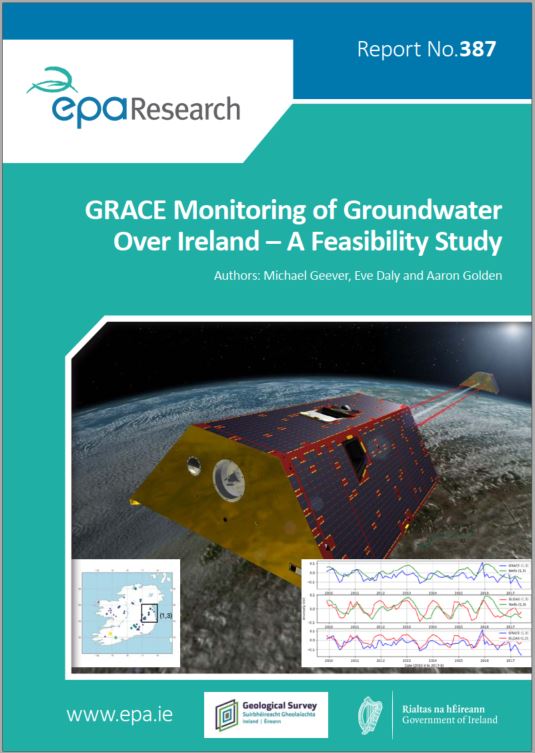
Research 387: GRACE Monitoring of Groundwater over Ireland – A Feasibility Study
Authors: Michael Geever, Eve Daly and Aaron Golden, August 2021
Year: 2021
Changing population trends, growing urbanisation and associated economic development increase pressure on our water resources. This project investigates the feasibility of using space-based observations of gravitational anomalies, obtained by NASA’s Gravity Recovery and Climate Experiment (GRACE), to assess groundwater variations at a regional level across the island of Ireland. The report fully documents ways of accessing, processing and visualising GRACE gravitational anomaly data, and outlines a means to integrate data from NASA’s land surface model with data from the EPA’s HydroNet groundwater well network.
Research 386: The Status of Ireland’s Climate, 2020
Editors and Lead Authors: Walther C.A. Cámaro García and Ned Dwyer, August 2021
Year: 2021
As an island on the western boundary of Europe facing the Atlantic Ocean, Ireland is ideally positioned to measure and assess ongoing climate change. The first Status of Ireland’s Climate report was published in 2013. This second status report provides an update, incorporating new datasets and analyses as well as reporting ongoing climate observations over the last 7 years.
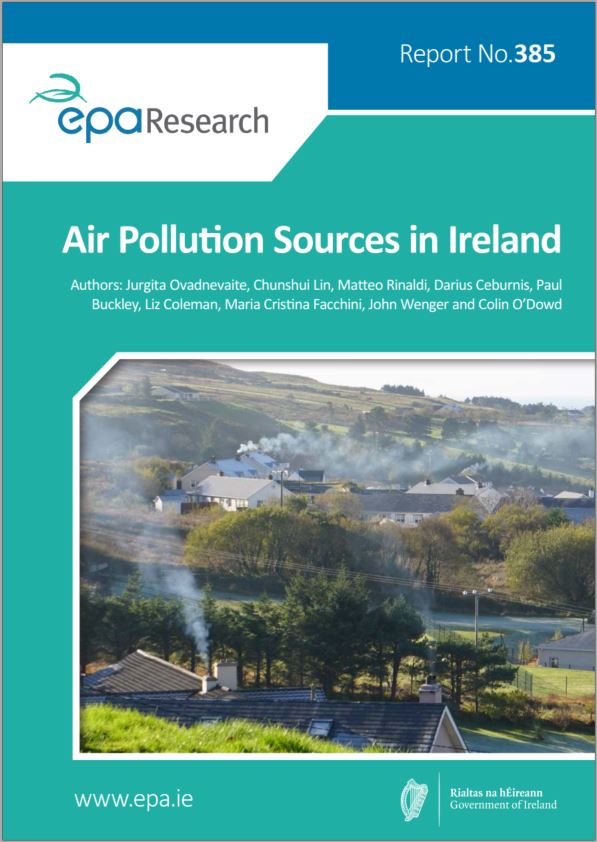
Research 385: Air Pollution Sources in Ireland
Authors: Jurgita Ovadnevaite, Chunshui Lin, Matteo Rinaldi, Darius Ceburnis, Paul Buckley, Liz Coleman, Maria Cristina Facchini, John Wenger and Colin O’Dowd, July 2021
Year: 2021
The project successfully established the AEROSOURCE network, comprising three sophisticated aerosol mass spectrometer nodes positioned in strategic locations: Carnsore Point (regional background), Dublin (urban environment) and Mace Head (marine background). It enhanced the National Transboundary Air Pollution Network with near real-time aerosol chemical speciation (including organic matter) and source apportionment capabilities.