Static and ELF EMF Monitoring Programme
What are static and ELF fields?
- Static Fields: Static fields are created by direct current (DC) systems like underground DC cables. There is only a very small amount of DC cables on the Irish Transmission Network. Static electric fields are blocked by walls and ground while static magnetic fields are not. Static fields get weaker the further you are from the cables and are usually low a few metres away from the source.
- ELF Fields: Extremely Low Frequency (ELF) electric and magnetic fields (EMF) are created by alternating current (AC) systems like power lines and underground AC cables. The majority of the grid uses AC systems. Extremely low frequency (ELF) fields range from 1 Hertz (Hz) to 3 kilo Hertz (kHz). In Ireland, electricity runs at 50 Hz. ELF fields fall quickly with distance and are usually low a few metres away from the source. For example, ELF levels 100 m from a power line are negligible. ELF electric fields are blocked by walls and ground, but ELF magnetic fields are not.
Ireland’s electricity transmission network
Ireland's transmission network uses high-voltage systems in overhead lines, underground cables, and substations. Voltages used in Ireland range between 110 and 400 kilovolts (kV). The distribution network, such as the power lines on timber poles that carry power to houses, uses lower voltages.
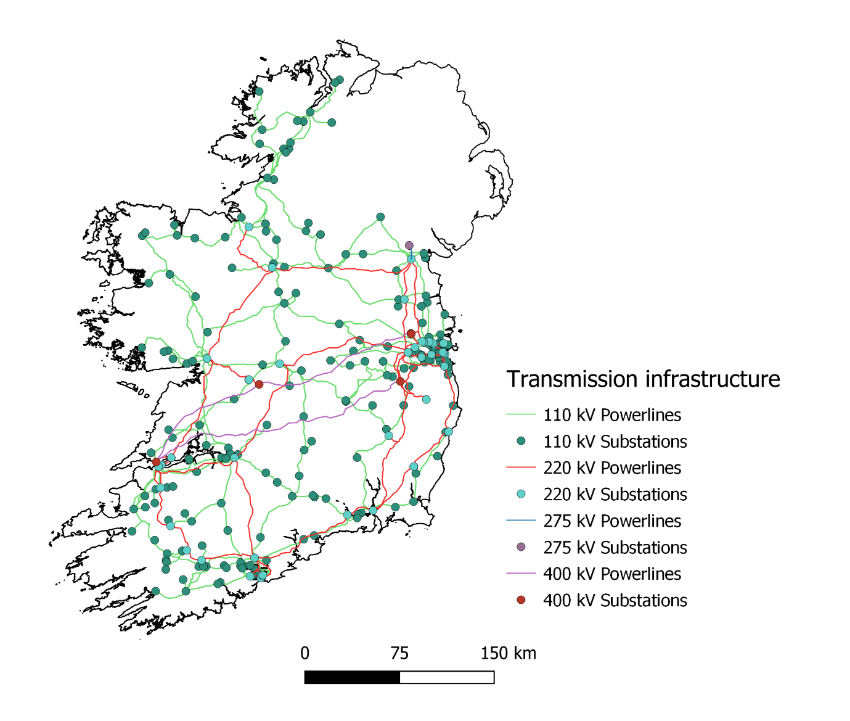
High-voltage transmission infrastructure in Ireland (Source: EirGrid data 2023)
Why monitor EMF from the transmission network?
High-voltage systems like overhead powerlines (commonly known as “pylons”) can produce higher EMF levels than lower-voltage systems. Monitoring carried out in Ireland and other countries to date show that the levels of EMF from electricity infrastructure do not pose any health risks.
Does anyone else monitor ELF EMF?
Yes, EirGrid, the company that manages Ireland’s electricity grid, checks EMF levels for their electricity infrastructure.
How is the EPA's monitoring different from EirGrid's monitoring?
EirGrid checks EMF levels from grid infrastructure. The EPA looks at places where people live or work near that infrastructure.
What has the EPA measured?
The EPA has checked how much EMF people are exposed to within 50 metres of major transmission electricity infrastructure (e.g. high-voltage powerlines).
What was measured?
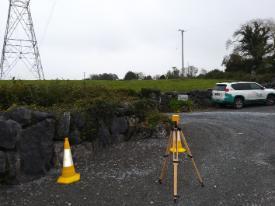 Typical survey site near a high-voltage powerline
In 2023–2024, the EPA measured EMF levels within 50 metres of high-voltage power lines, underground cables, and substations at 52 locations. These locations were chosen to represent typical EMF exposure levels in the proximity of transmission infrastructure in Ireland. We compared these levels to EU guidelines known as Reference Levels.
Typical survey site near a high-voltage powerline
In 2023–2024, the EPA measured EMF levels within 50 metres of high-voltage power lines, underground cables, and substations at 52 locations. These locations were chosen to represent typical EMF exposure levels in the proximity of transmission infrastructure in Ireland. We compared these levels to EU guidelines known as Reference Levels.
How were measurements taken?
- Measurements were carried out following international standards and using high-quality, calibrated equipment.
- Measurements included EMF levels, distance to source and environmental conditions (temperature and humidity).
- 79 measurements were taken at the 52 locations using high quality equipment.
- Locations were chosen based on infrastructure type and nearby buildings.
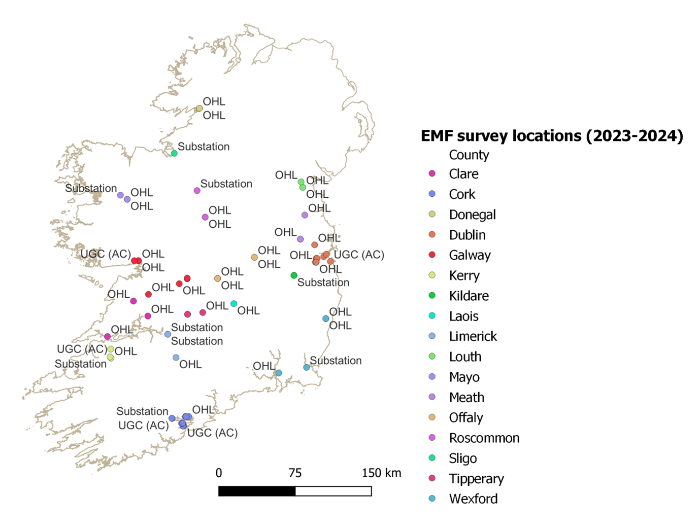
Locations of EMF surveys in 2023-2024 by type of electrical infrastructure and county (including Overhead Lines (OHL), Alternating Current (AC) or Direct Current (DC) Underground Cables (UGC) and Substations).
What did the results show?
- Static Magnetic Fields: All readings were well below the EU Reference Level of 40 milli-Tesla (mT)2
- ELF Magnetic Fields: All readings were below the EU Reference Level of 100 micro-Tesla (µT)3
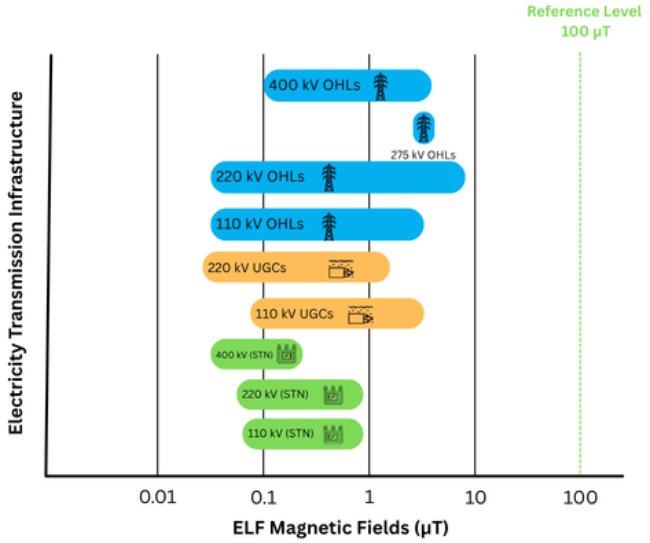
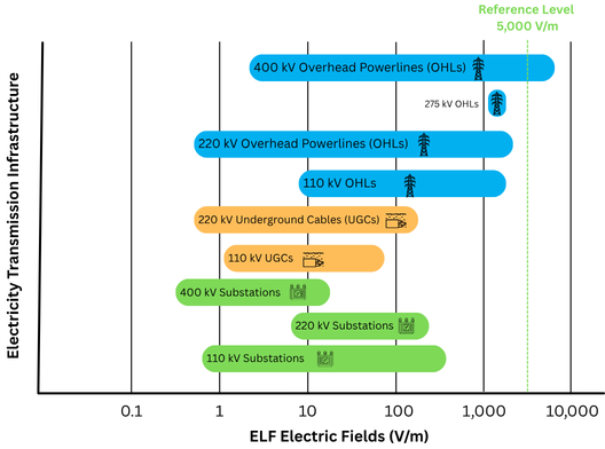
- ELF Electric Fields: Most readings were below the EU Reference Level of 5,000 volts per meter (V/m2). Two readings near 400 kV lines were above but still safe. (see further information below). These two locations continue to be
monitored.
A report containing all results is available here: Results of Static and ELF EMF Monitoring Programme 2023-2024
Are these levels dangerous?
No. The levels found do not cause any known health effects as Reference Levels are conservative. All levels measured were below the threshold for minor effects on the senses - like seeing flickering lights (known as phosphenes).
What's next?
The EPA will continue monitoring and working with other organisations, including the World Health Organisation, to keep itself up to date on the science relating to EMF.
Useful resources
EirGrid 2024. Your guide to understanding electric and magnetic fields (EMFs)
EirGrid 2014. Evidence Based Environmental Study 1 EMF