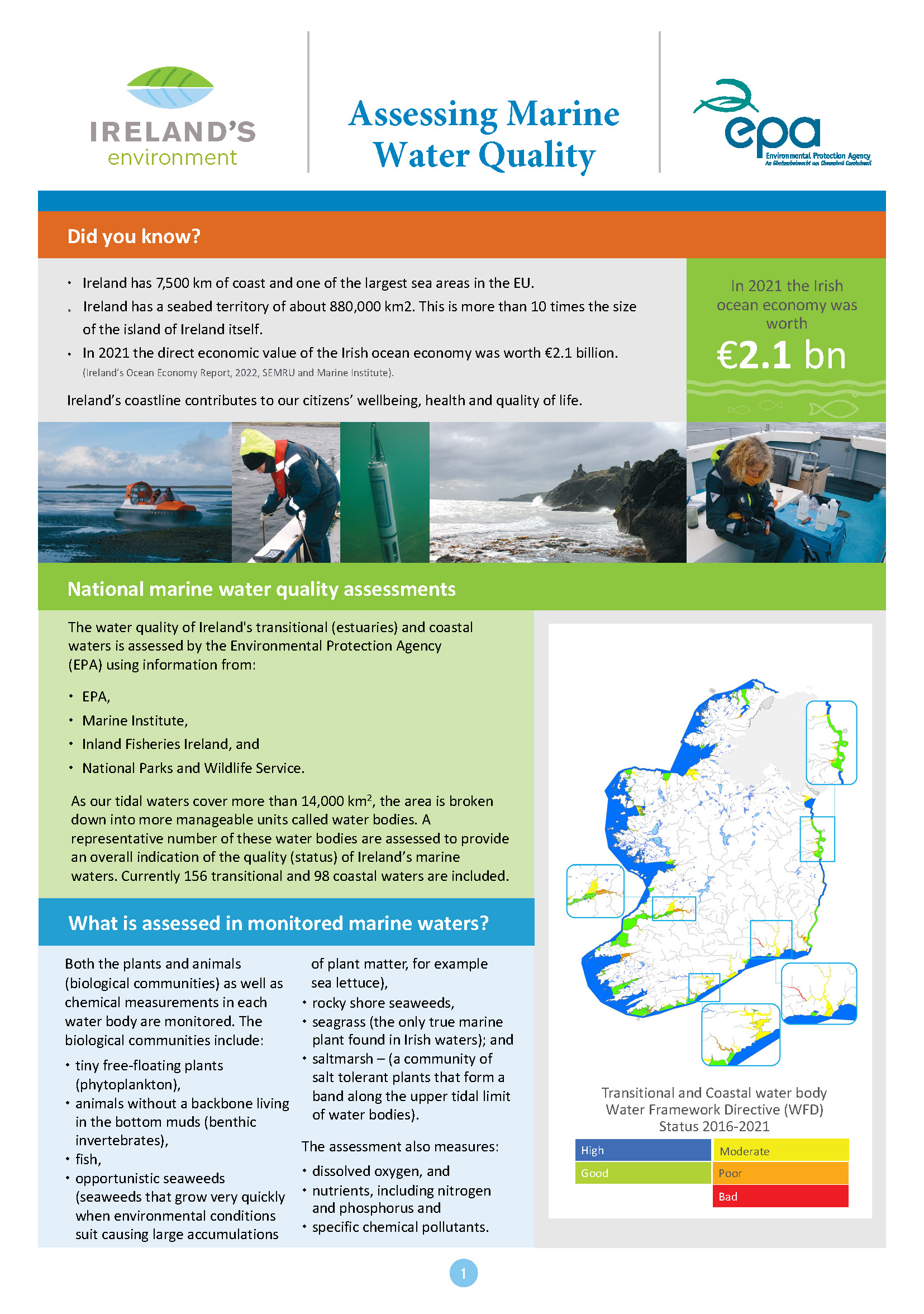
Assessing marine water quality - EPA fact sheet
This Plain English fact sheet outlines the work done by the EPA in monitoring and assessing Ireland’s marine environment. , April 2023
Year: 2023
Ecologically healthy marine waters are a valuable natural resource. They support a rich and diverse range of ecosystems, habitats and species, and they are also a source of food – from wild fisheries and aquaculture. They are also important for recreational activities and tourism.
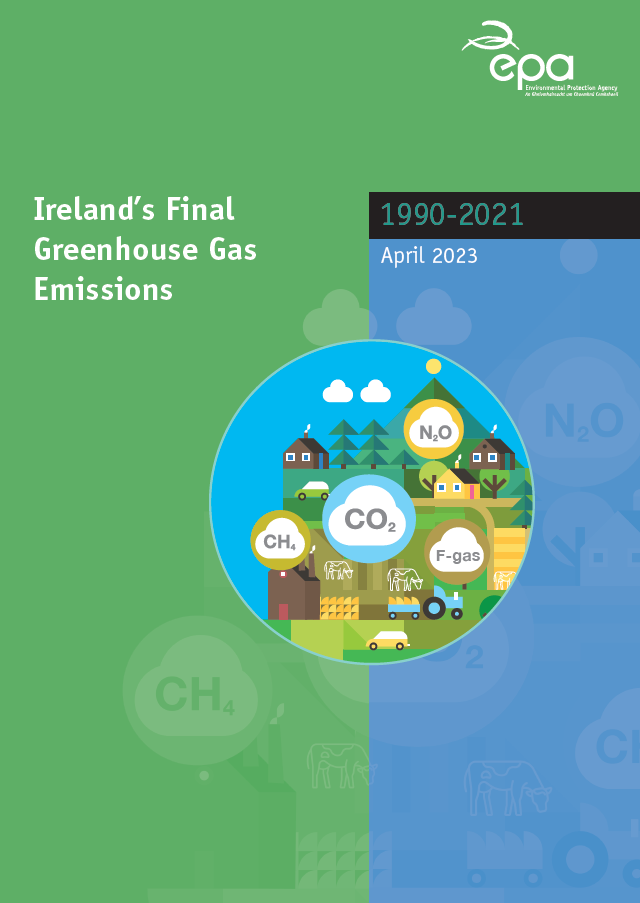
Ireland's Final Greenhouse Gas Emissions 1990-2021
Year: 2023
The EPA has produced final estimates of greenhouse gas emissions for the time period 1990-2021
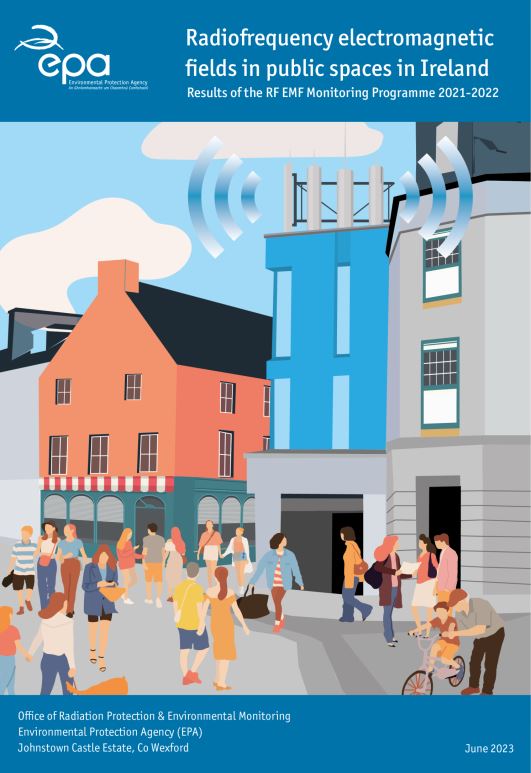
Radiofrequency electromagnetic fields in public spaces in Ireland
Results of the Radio Frequency Electromagnetic Fields Monitoring Programme 2021-2022, March 2023
Year: 2023
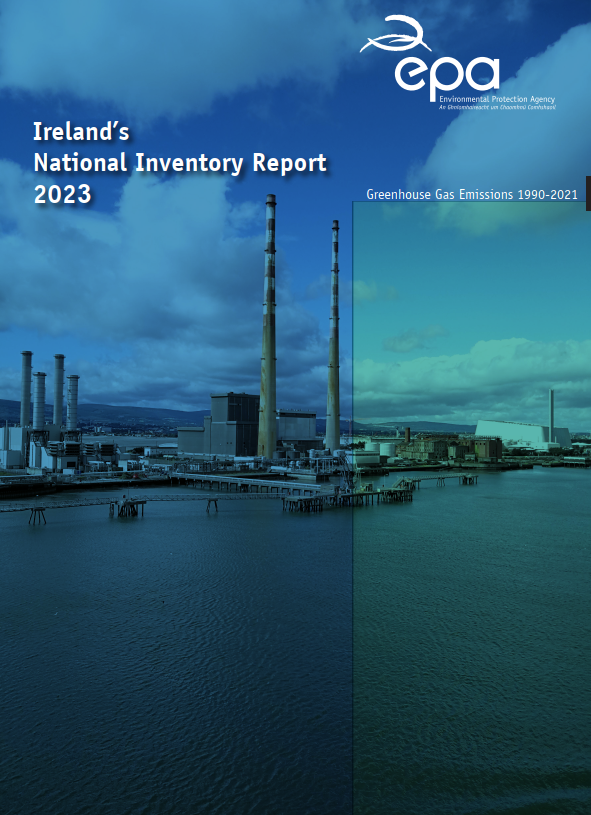
Ireland's National Inventory Submissions 2023
Year: 2023
Ireland's annual inventory submissions including the National Inventory Report (NIR) and Common Reporting Format (CRF) data files and supplementary information if available. The NIR contains transparent and detailed information on the inventory for years 1990-2021. The CRF tables contain all greenhouse gas (GHG) emissions and removals, implied emission factors and activity data..
Ireland's UNECE Submissions 2023
Year: 2023
Ireland's submissions under UNECE Convention on Long-Range Transboundary Air Pollution (CLRTAP) and National Emissions Ceiling Directive (NECD) include the Informative Inventory Report (IIR) and Nomenclature for Reporting (NFR) tables. The IIR and NFR contain detailed information on methodologies, activity data and emission factors and emissions for years 1990-2021.
PFOA concentration of selected foams
Year: 2023
Eionet Ireland Network Brochure 2023
Year: 2023
National Focal Points (NFPs) are the primary national contact points in the EIONET and the EEA works closely with them. Typically based in a national environment agency or environment ministry, an NFP is appointed by their EEA member country. The Environmental Protection Agency acts as the NFP for Ireland, coordinating environmental information exchange with the EEA and others. In its NFP role, the EPA maintains and develops the national network. It also facilitates and coordinates contacts, requests and deliveries between national and EU level. [February 2023]
Cáilíocht an Aeir in Éirinn
Tuarascáil 2021, January 2023
Year: 2023
Achoimre: Tá cáilíocht an aeir in Éirinn go maith go ginearálta, ach tá ceisteanna áitiúla imníoch a bhfuil tionchar diúltach acu ar an aer a análaimid. Chomhlíon Éire a riachtanais dhlíthiúla uile AE í 2021, ach níor chomhlíon sí na treoirlínte nua WHO bunaithe ar shláinte í 2021. Ba cheart d’Éirinn agus don Eoraip bogadh i dtreo treoirlínte cáilíochta aeir WHO atá bunaithe ar shláinte a bhaint amach.
Note of land evidence forum meeting, 19 January 2023
Year: 2023
Land evidence forum meeting notes 19 January 2023
Guidance on SEA Statements and Monitoring
Year: 2023
This report is an update of the previous stand-alone guidance document on SEA Statements and monitoring, prepared as part of the EPA-funded project Second Review of SEA Effectiveness in Ireland (González et al., 2020). It is specific to the Irish context but has wider international applicability. The monitoring recommendations include guidance on indicators to facilitate a more consistent and coherent approach at this SEA stage. The updates relate to clarifying some SEA monitoring requirements and to acknowledge the published revised national SEA Guidelines and the Development Plan Guidelines for Planning authorities, both published by the DHLGH in 2022.
Assigning WFD Status to Unmonitored Water Bodies in 2013-2018
A technical report outlining the methodologies used in surface waters and groundwaters, December 2022
Year: 2022
The purpose of this technical paper is to outline how status is assigned to the remaining unmonitored surface waters and groundwaters.
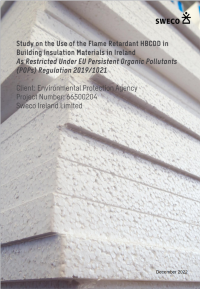
Study on the Use of the Flame Retardant HBCDD in Building Insulation Materials in Ireland
Year: 2022
This report examines the historical use of hexabromocyclododecane (HBCDD), a persistent organic pollutant (POP) and brominated flame retardant that was widely used in building insulation materials for fire safety. HBCDD is persistent, bioaccumulative and toxic, posing risks to human health and the environment and is regulated under EU POPs Regulation (2019/1021).
Roundwood Appropriate Assessment Screening
Year: 2022
National Waste Statistics Summary Report for 2020
Year: 2022
This report summarises EPA data on waste generation and management in Ireland in 2020. It highlights key trends and progress towards EU targets and identifies where further measures are needed to improve Ireland's recycling rates and deliver the transition to a circular economy. The report collates and synthesises information available on the EPA Waste Statistics webpages: www.epa.ie/nationalwastestatistics
Water Quality Monitoring Report on Nitrogen and Phosphorus Concentrations in Irish Waters 2021
This report provides an update on the results of water quality monitoring to support the assessment of the impact of the nitrate’s derogation on Irish waters, as required under Regulation 38 of the European Union (Good Agricultural Practices for the Protection of Waters) (Amendment) Regulations. , November 2022
Year: 2022
The data contained in this report finds that nitrate concentrations remain too high in rivers, groundwater and estuaries in the south east and along the southern seaboard. Nationally, although there has been year on year fluctuation in the average nitrate concentration, its apparent that average nitrate concentrations have increased in the last decade in all water types. Compared to a decade ago, on average, approximately an additional 6,000 tonnes of nitrogen is now being discharged to marine waters in the south east and along the southern seaboard of Ireland each year.
Clara Bog Appropriate Assessment Screening
Year: 2022