Hazardous Waste Highlights for 2024
~ 209,000 tonnes (53%) were exported for treatment
Thus, ~ 188,000 tonnes (47%) were treated at Irish facilities.
40,000 tonnes of Contaminated Soils were generated
This increased from 30,000 tonnes in 2023. Over 99% were treated in Ireland.
EPA hazardous waste data release 02 March 2026 for reference year 2024. Data subject to Eurostat validation.
Highlights ~ Generation ~ Treatment ~ More Information ~ Data Download ~ Links
Generation
In 2024, 396,651 tonnes of hazardous waste were generated in Ireland in 2024.
Hazardous waste is generated from three main sources:
Industrial facilities (including mining, pharma-chem and waste recovery facilities etc.) remain the largest source of hazardous waste in Ireland. In 2024 they contributed to 80% of hazardous waste. Types of waste generated include by-products of waste treatment, industrial solvents, sludges, oils, waste electrical & electronic equipment (WEEE), batteries and infectious waste from health care.
Construction and demolition contributed 13% of hazardous waste generated. The contribution includes asbestos, contaminated soils, and other construction and demolition material contaminated with hazardous substances.
The municipal sector (households, small businesses, farms, schools etc.) produces approximately 7% of Ireland’s hazardous waste. Examples of waste include batteries, certain waste electrical and electronic equipment, healthcare risk waste, solvent-based paints, varnishes, and waste oils.
The types of hazardous waste generated can be grouped according to List of Waste chapter, as shown in Table 1 below.
| Waste Type | LoW Chapter | Tonnes |
|---|---|---|
| Solvents | 7,8,14,20 | 61,171 |
| Soil | 17 | 40,696 |
| Waste Treatment Residue | 19 | 35,982 |
| Waste Oils | 13 | 34,873 |
| Discarded Equipment | 16 | 21,380 |
| Health Care | 18 | 17,921 |
| Other | various | 184,629 |
| Total | 396,651 |
Table 1. Hazardous waste generated by List of Waste (LoW) code generated in Ireland in 2024. Data download available below.
Figure 2 shows the changes in hazardous waste types treated since 2018. Incinerator bottom as was reclassified in 2020 and is now treated as non-hazardous waste, other waste treatment residues remain stable. The quality of contaminated soil and dredging spoil generated depends on the extent of development and remediation work at brown field sites.
Treatment
Of the roughly 397,000 tonnes of hazardous waste generated in Ireland in 2024, 41% was treated by disposal the remainder was recovered or recycled. Around 209,000 tonnes (53%) were exported for treatment, which was an increase of almost 7,000 tonnes from 2023. The remaining hazardous waste, around 188,000 tonnes (47%) were treated in Ireland.
Within the broader trend shown in Figure 3, treatment of contaminated soils shows a clear pattern of reducing exports and increasing treatment in Ireland. In 2024, exports of contaminated soil have decreased to less than 1% of soils generated.
Figure 4 below shows the countries (all party to the Basel Convention) that accepted hazardous waste from Ireland. EU member states and Great Britain and Northern Ireland accepted over 99% of our hazardous waste exports in 2024.
Treatment in Ireland took place at hazardous waste facilities and industrial facilities that are licensed by the EPA to treat waste generated on site. Treatment of waste generated on site at industrial facilities resulted in the treatment of approximately 16,000 tonnes of hazardous waste at 9 locations, the decrease of over 11,000 tonnes was due to operational changes. Figure 5 shows the range of disposal and recovery activities used at these sites.
More Information
Hazardous waste is waste that can harm humans or the environment due to properties such as being explosive, flammable, toxic, corrosive, carcinogenic, infectious, mutagenic, sensitising, or eco-toxic. Because of the risks involved, hazardous waste is strictly regulated to protect human health and the environment. The labels that identify the type of hazard the waste presents are pictured in Figure 4. Hazardous waste is identified with an * in its LOW Code e.g. 15 01 10* hazardous packaging.
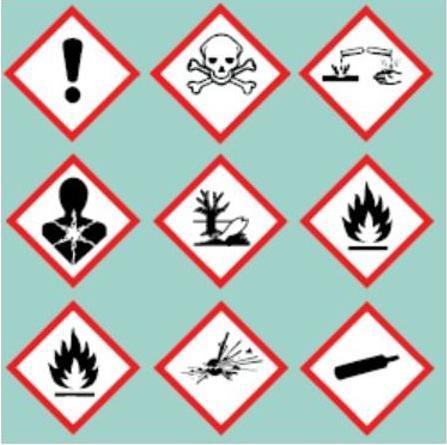
Figure 6: Pictograms to be used on labels under the Classification, Labelling and Packaging Regulations (EC) No 1272/2008
Hazardous waste must be treated to minimise risks to human health and the environment. In Ireland, hazardous waste can either be:
- treated on-site under EPA license, at Irish domestic hazardous waste facilities, or exported for treatment at approved facilities abroad.
- Finally treated at an EPA licenced waste facility
- Pre-treated from hazardous to non-hazardous waste at an EPA licensed facilities
- Exported for treatment from
- EPA licensed waste and industrial site.
- LA permitted waste sites.
- Commercial (non-waste) facilities
- Exported directly from sites where it was generated.
European reporting
The UN Basel Convention (1992), along with EU and Irish regulations, controls the movement and disposal of hazardous waste and strengthens enforcement within and beyond the EU.
As part of annual reporting under the Basel Convention, the EPA submits hazardous waste statistics for Ireland to the Department of Climate, Energy and the Environment for transmission to Eurostat, the statistical office of the European Union. The data are required to be submitted by 31st December of the reference year +1 (i.e. 2024 data were collected and processed in 2025 and submitted to Eurostat by 31st December 2025). Following validation by Eurostat, official statistics for Ireland and all Member States are published on the Eurostat website as part of the following dataset:
Transboundary shipments of notified waste by partner, hazardousness and waste management operations
Data Download
2024 Hazardous Waste Data for Ireland 26 (KB)
Download a Microsoft Excel file containing the hazardous waste data for 2024.