Latest Research Publications
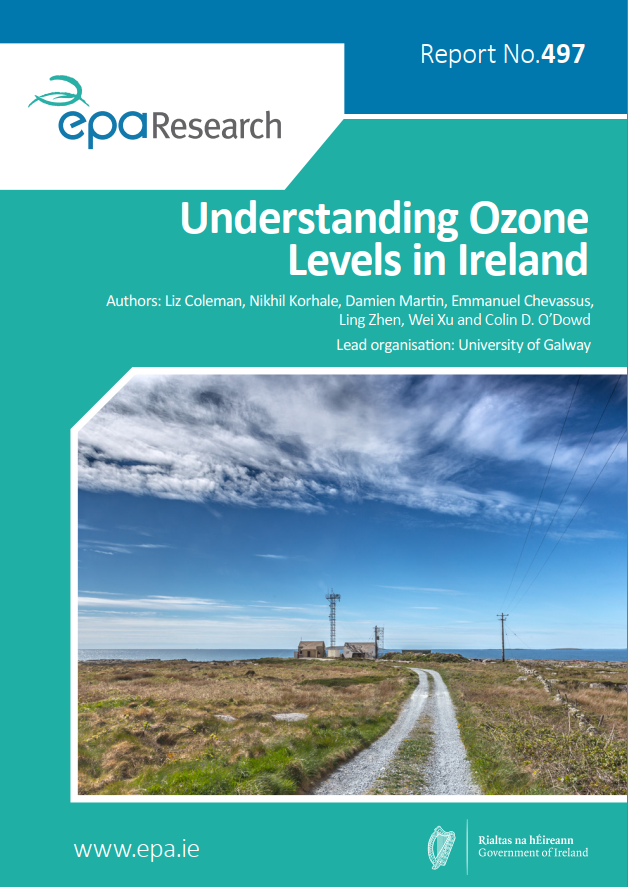
Research 497: Understanding Ozone Levels in Ireland
Authors: Liz Coleman, Nikhil Korhale, Damien Martin, Emmanuel Chevassus, Ling Zhen, Wei Xu and Colin D. O’Dowd, November 2025
Year: 2025
Ozone plays a crucial role in atmospheric chemistry, forming naturally in the stratosphere and at ground level through sunlight and precursor pollutants. While essential, ground-level ozone poses risks to human health and ecosystems. A University of Galway-led study explored the drivers of ozone pollution in Ireland, highlighting the influence of meteorology and transboundary emissions. Using long-term data and advanced modelling, researchers found that rural and coastal areas experience higher ozone levels than urban zones, though urban ozone is rising in Ireland and at a Global level due to declining NOₓ emissions. The study identifies methane as the main reactive carbon precursor to Irish ground-level ozone. The findings provide policy actors with evidence that supports the use of high-resolution modelling to understand ozone trends and recommends increased public awareness using educational campaigns.
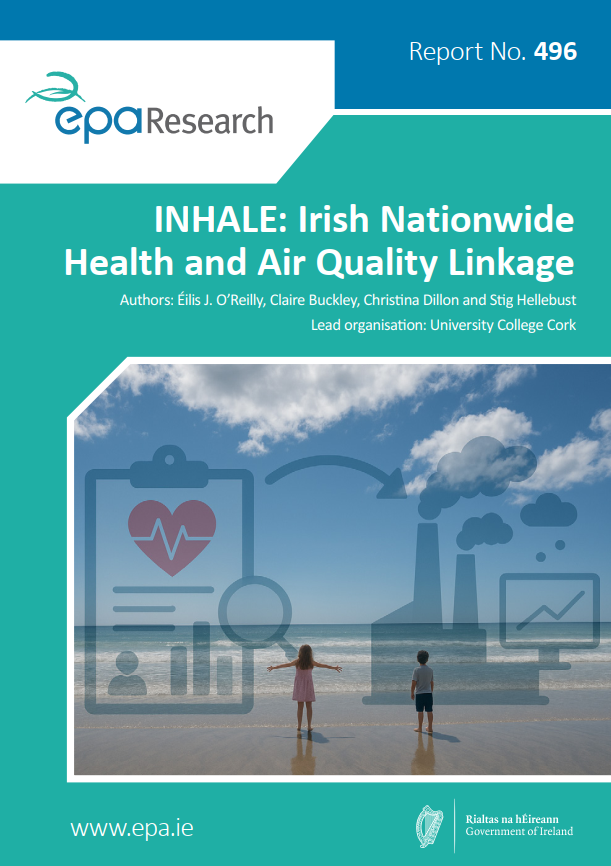
Research 496: INHALE: Irish Nationwide Health and Air Quality Linkage
Authors: Éilis J. O’Reilly, Claire Buckley, Christina Dillon and Stig Hellebust, October 2025
Year: 2025
Outdoor air pollution is “the single biggest environmental health risk”, accounting for almost 4.2 million premature deaths in 2019 (WHO, 2024). The INHALE project, led by University College Cork, reviewed global best practices for linking air quality and health data while protecting patient confidentiality. It proposed two solutions for Ireland: investing in trusted research environment (TRE) infrastructure to securely share de-identified, individual-level data, and a researcher-led method that links pollution data to Eircodes and merges it with health records through data custodians. The INHALE project provides policymakers with greater insight and evidence to facilitate cost-effective methods to address barriers in linking air quality and health data. It recommends more investment of dedicated resources to better understand the health effects of air pollution.
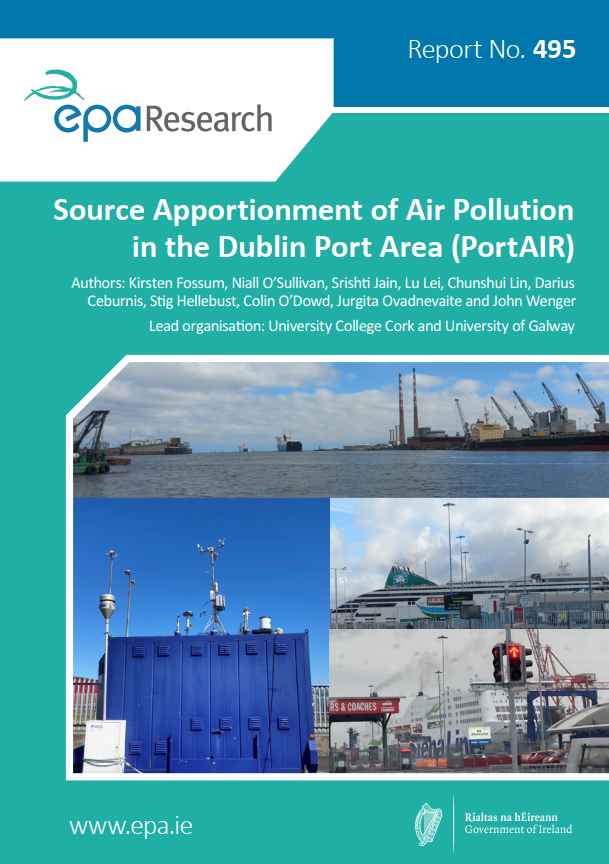
Research 495: Source Apportionment of Air Pollution in the Dublin Port Area (PortAIR)
Authors: Kirsten Fossum, Niall O’Sullivan, Srishti Jain, Lu Lei, Chunshui Lin, Darius Ceburnis, Stig Hellebust, Colin O’Dowd, Jurgita Ovadnevaite and John Wenger, October 2025
Year: 2025
Dublin Port, Ireland’s largest freight and passenger port, brings significant economic and social benefits, however emissions from ships and other port-related activities contribute to climate change and air pollution. The PortAIR project conducted the first detailed study of air quality impacts from ships and port activities using continuous monitoring and advanced modelling throughout 2022. It identified two main ship plumes: one dominated by sulfate from high-sulfur fuel with scrubbers and another by organic species from low-sulfur fuels. Ship emissions peaked during manoeuvring. With port expansion planned, emission reduction strategies are recommended, including shore-side electricity, emission control zones, battery-powered vessel and cleaner fuels. The study highlights the importance of advanced instruments for continuous air quality monitoring and recommends the need for further research into mitigation technologies.
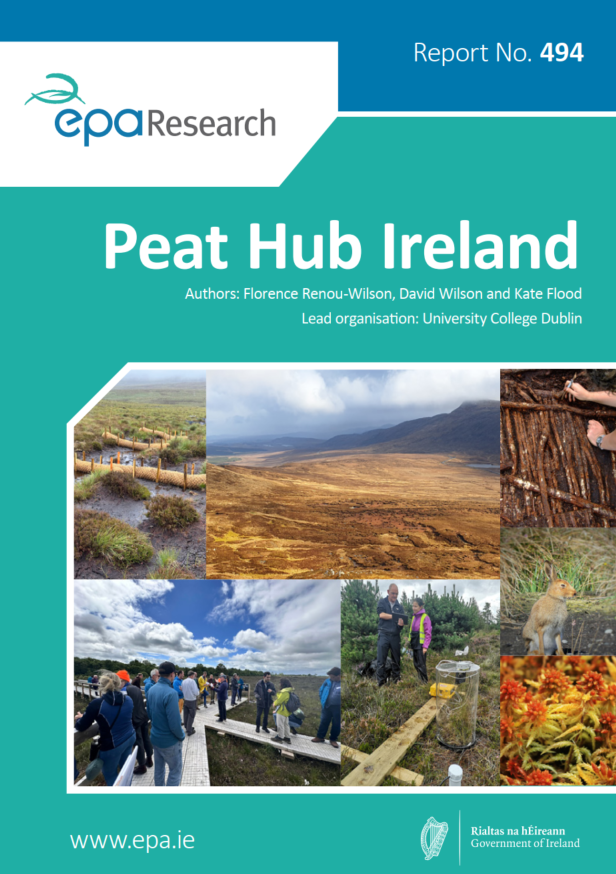
Research 494: Peat Hub Ireland
Authors: Florence Renou-Wilson, David Wilson and Kate Flood, October 2025
Year: 2025
Healthy peatlands offer vital benefits for human well-being, including cleaner air and water, carbon storage, and cultural value. Across Europe, there is growing recognition of the need to protect undrained peatlands, rewet drained ones, and restore degraded areas. The Peat Hub Ireland project led by a team from University College Dublin reviewed Irish peatland research from 2000–2023 to identify trends, risks, and knowledge gaps. It highlighted 71 research gaps and 96 priority actions across biodiversity, climate, policy, and more. Peat Hub Ireland also produced a glossary, open-source database, and 10 thematic factsheets to support accessible knowledge sharing. The research findings provide policymakers, researchers, and civil society with evidence-based information. It also provides tools to support decision-making around sustainable management and governance of peatlands in Ireland as a critical national resource.
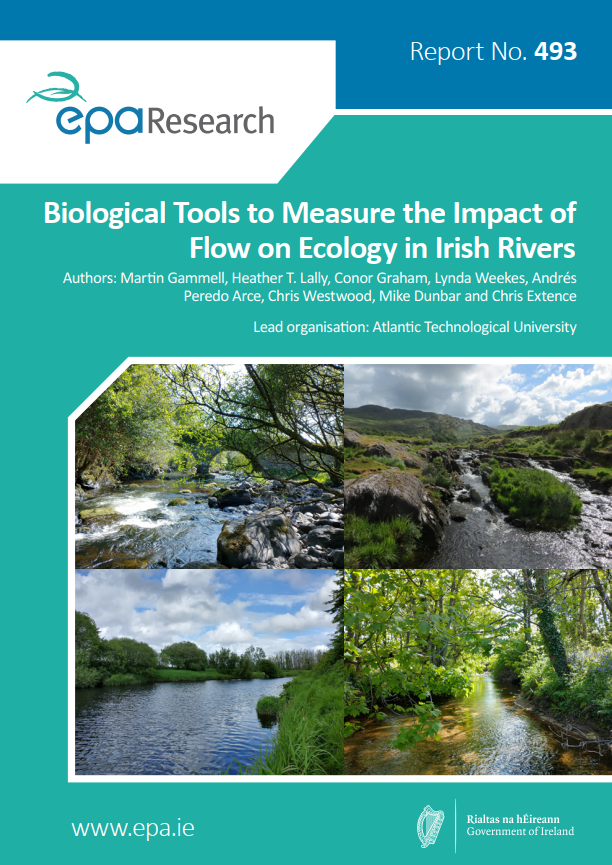
Research 493: Biological Tools to Measure the Impact of Flow on Ecology in Irish Rivers
Authors: Martin Gammell, Heather T. Lally, Conor Graham, Lynda Weekes, Andrés Peredo Arce, Chris Westwood, Mike Dunbar and Chris Extence, September 2025
Year: 2025
Researchers from Atlantic Technological University, examined the use of biomonitoring tools (called hydroecological indices) for measuring the effects of changes in flow on biota (species) in Irish Rivers. Human driven factors like climate change, water abstraction and instream barriers can alter river flows, thereby having negative impacts on river biota. It is important to be able to monitor and mitigate such impacts. Showing clear links between flow changes and ecological conditions, this research successfully adapted two existing macroinvertebrate indexes and developed a new macrophyte index for use in Irish rivers, further research is needed to test the overall performance of the later. Findings include recommending the use of hydroecological monitoring tools in national biological monitoring programmes to help address national policy, including the Water Action Plan 2024 and the Water Environment (Abstractions and Associated Impoundments) Act 2022.
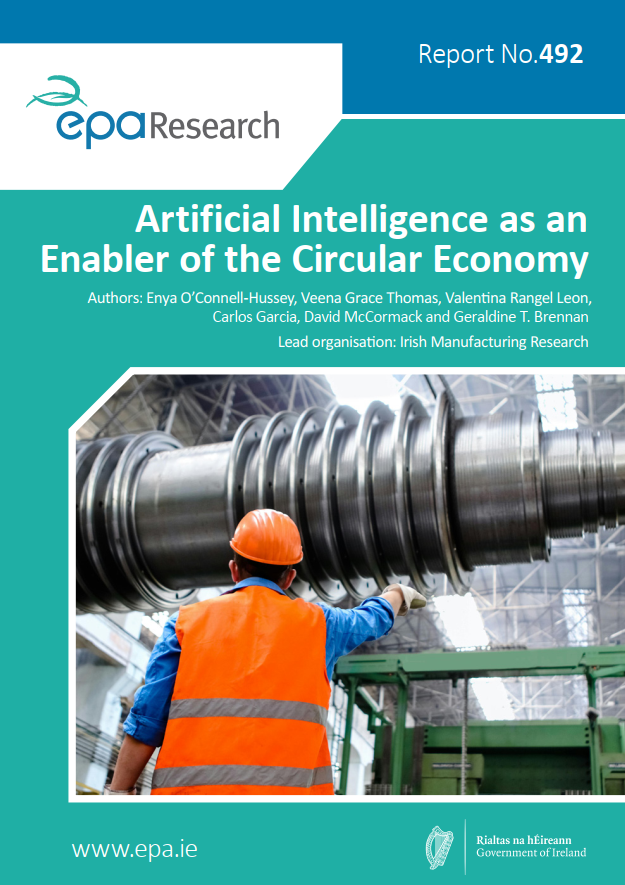
Research 492: Artificial Intelligence as an Enabler of the Circular Economy
Authors: Enya O’Connell-Hussey, Veena Grace Thomas, Valentina Rangel Leon, Carlos Garcia, David McCormack and Geraldine T. Brennan, September 2025
Year: 2025
The Artificial Intelligence for Circular Economy in Ireland (AI4CE) research project found that while Ireland’s AI adoption rate exceeds the EU average, its use in advancing the circular economy (CE) is still in its early stages and mainly concentrated in waste and recycling. The findings highlight key barriers including low awareness of AI-CE synergies, financial limitations (especially for SMEs), data governance challenges, skill shortages, and resistance to change. AI4CE recommends more investment in education about AI, increased stakeholder collaboration, improved infrastructure, and clear business cases to demonstrate cost savings and efficiency gains. To support adoption, AI4CE developed three resources: a Decision Support Tool with case studies, a Best Practice & Policy Guide explaining AI-CE integration and regulations, and a Status Report summarising current AI use in Ireland’s CE landscape.
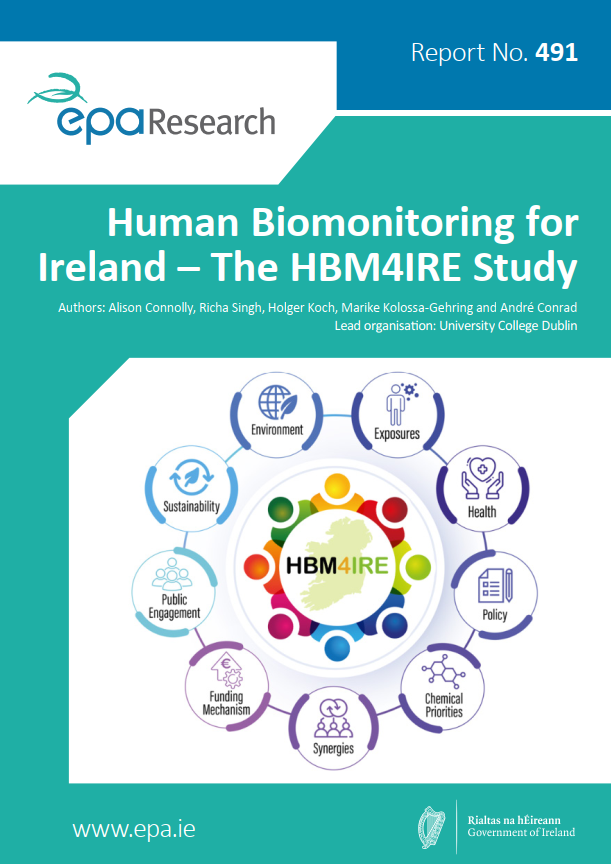
Research 491: Human Biomonitoring for Ireland – The HBM4IRE Study
Authors: Alison Connolly, Richa Singh, Holger Koch, Marike Kolossa-Gehring and André Conrad, September 2025
Year: 2025
The Human Biomonitoring for Ireland (HBM4IRE) project assessed the feasibility of establishing a national Human Biomonitoring (HBM) programme in Ireland to better understand cumulative chemical exposure from various sources. Despite EU regulations, concerns remain about long-term health impacts, and HBM offers a more accurate method of measuring human exposure through biological samples. The study confirmed Ireland’s capacity to implement such a programme, aligning with EU initiatives like the Green Deal and Zero Pollution Action Plan. Key outcomes include Ireland’s first priority chemical list, a proposed governance framework involving agencies like the EPA and HSE, and recommendations for stakeholder engagement, data transparency, and sustained funding. The findings support evidence-based policymaking, improved public health protections, and international collaboration. HBM4IRE also provides a roadmap for future efforts, including addressing.
.png)
Research 490: Importance of Physico-chemical Cycling of Nutrients and Carbon in Marine Transitional Zones (Nuts & Bolts)
Authors: Peter Croot, Rachel Cave, Sheena Fennell, Maija Heller, Tiernan Henry, Nadeeka Rathnayake, Fatimatuj Zohara Sonny and Dagmar Stengel, August 2025
Year: 2025
Marine transitional zones (MTZs) serve as important material filters in the transfer of elements and chemical species from land to sea. Through physico-chemical and biological processes, nutrients and trace metals are either removed or chemically altered within MTZs, resulting in a reduced flux of materials to the coastal zone. This research, led by a team from the University of Galway, aims to enhance our understanding of the impact of multiple environmental stressors on Irish MTZs. The study involves biogeochemical and bio-optical investigations at four characteristically different sites: the Shannon Estuary, Kinvara Bay, Lough Furnace, and Galway Bay. New data generated from this research will improve our ability to predict and model the effects of climate change and other anthropogenic stressors on good environmental status of MTZs. Additionally, the study provides essential environmental information to support decision-making related to the management and governance of Irish MTZs.
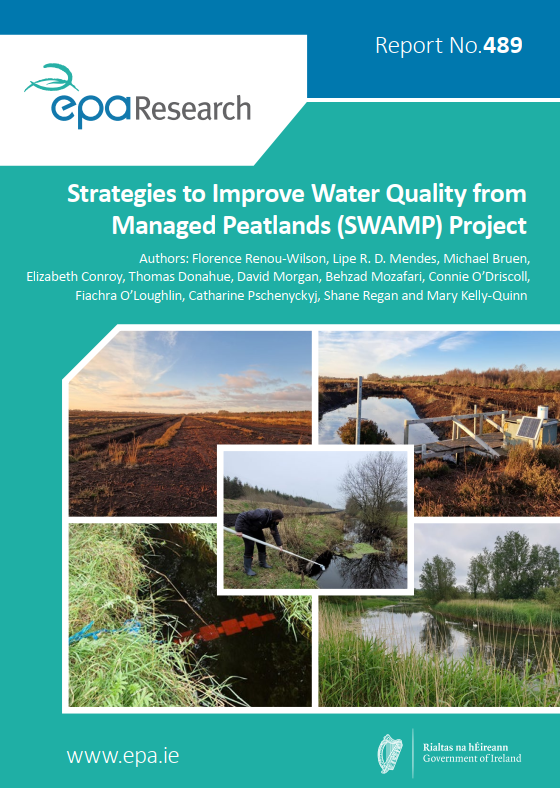
Research 489: Strategies to Improve Water Quality from Managed Peatlands (SWAMP) Project
Authors: Florence Renou-Wilson, Lipe R. D. Mendes, Michael Bruen, Elizabeth Conroy, Thomas Donahue, David Morgan, Behzad Mozafari, Connie O’Driscoll, Fiachra O’Loughlin, Catharine Pschenyckyj, Shane Regan and Mary Kelly-Quinn, July 2025
Year: 2025
The Strategies to Improve Water Quality from Managed Peatlands (SWAMP) research project aimed to address key knowledge gaps about water quality degradation in Ireland's peatland areas. This degradation is caused by decades of drainage for industrial and domestic peat extraction. The project reveals how long-term drainage for peat extraction and other land uses have negatively impacted Ireland's rivers and streams. Drained peatlands have leached harmful nutrients, acids, and carbon-rich water into these water bodies. The research focuses on identifying pollution hotspots, measuring the effects of peat soil drainage on water chemistry and aquatic biodiversity, assessing pollution prevention measures, and developing better hydrological models to predict the response of peatlands to drainage and restoration. These findings come at a crucial time as Ireland must address the specific challenges of complying with the Water Framework Directive and fulfilling the Nature Restoration Law.
Guidelines on the Preparation of Evidence Synthesis Reports
Year: 2025
Guidelines on the Preparation of Evidence Synthesis Reports
EPA Research Evidence Synthesis Report Layout Template
Year: 2025
This template should be used for the preparation of EPA Research Evidence Synthesis Reports.
EPA Research Steering Committee Terms of Reference
Year: 2025
EPA Research Steering Committee Terms of Reference
EPA Research Report Layout Template
Year: 2025
This template should be used for the preparation of final reports for EPA Research projects.
Guidelines on the Preparation of Final Reports
Year: 2025
Guidelines on the Preparation of Final Reports

Research 488: Habitat Mapping, Assessment and Monitoring with High-resolution Unoccupied Aerial Vehicle Imagery (iHabiMap)
Authors: John Connolly, Charmaine Cruz, James R. Martin, Jerome O Connell, Kevin McGuinness and Philip M. Perrin, June 2025
Year: 2025
Ireland has a wide range of important habitats, identified under Annex I of the EU Habitats Directive, needing protection and restoration. Monitoring, reporting, and verifying these habitats is an essential activity under this directive, but this can be time-consuming and resource-intensive, particularly over large remote areas. This research (iHabiMap) has enhanced our ability to do this by integrating ecological and UAV surveys, image analysis, and machine learning to accurately map coastal, grassland, and upland habitats. iHabiMap produced habitat maps with over 90% accuracy, demonstrating the potential of UAV and AI technology in habitat monitoring. The methodology can support regular habitat assessments, is transferable to other habitat types, and can help monitor the degradation and rehabilitation of dune systems, salt marshes, uplands, and grasslands. The agile research methodology was also adapted to map and monitor the invasive species Spartina anglica in saltmarshes.
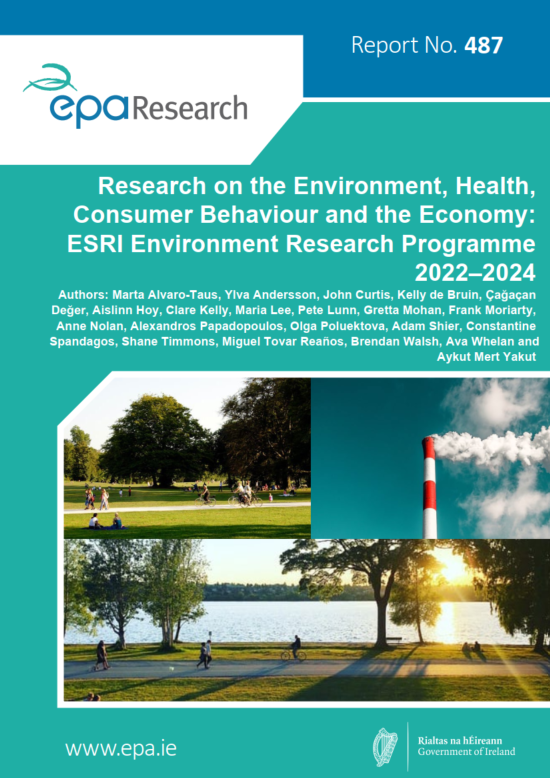
Research 487: Research on the Environment, Health, Consumer Behaviour and the Economy: ESRI Environment Research Programme 2022–2024
Authors: Marta Alvaro-Taus, Ylva Andersson, John Curtis, Kelly de Bruin, Çağaçan Değer, Aislinn Hoy, Clare Kelly, Maria Lee, Pete Lunn, Gretta Mohan, Frank Moriarty, Anne Nolan, Alexandros Papadopoulos, Olga Poluektova, Adam Shier, Constantine Spandagos, Shane Timmons, Miguel Tovar Reaños, Brendan Walsh, Ava Whelan and Aykut Mert Yakut, June 2025
Year: 2025
The EPA/ESRI Environment Research Programme produces policy-relevant applied research at the interface between the environment, economy, and society. This report on this fourth phase provides a summary of 13 studies, produced by the ESRI, that use a range of data and methodological approaches to provide insights into the environmental challenges facing Irish society. The studies include analyses of healthcare costs resulting from poor air quality and water-related diseases, public perceptions and behaviour in relation to environmental risks, the effects of greenwashing and eco-labels on consumers, as well as the role of enforcement in preventing pollution in Ireland.

Evidence Synthesis Report 7: Investigating the Likelihood of a Lough Neagh Bloom Scenario Happening in Ireland
Authors: Philip Taylor, Ezra Kitson, Linda May, Erica Zaja, Alice MacSporran, Zisis Gagkas, Sara Trojahn and Miriam Glendell , June 2025
Year: 2025
This study, conducted by the UK Centre for Ecology & Hydrology and the James Hutton Institute, reviewed the factors that contributed to the harmful algal bloom (HAB) event in Lough Neagh.

Research 486: Proactive Optical Monitoring of Catchment Dissolved Organic Matter for Drinking Water Source Protection (PRODOM)
Authors: John Weatherill, Boris Droz, Elena Fernández-Pascual, Jean O’Dwyer, Emma Goslan, Connie O’Driscoll and Simon Harrison, May 2025
Year: 2025
In Ireland, approximately 82% of public water supplies originate from surface water catchments. This water requires disinfection with chlorine to inactivate pathogens and prevent the spread of waterborne disease. The presence of dissolved organic matter (DOM) in source waters can lead to the formation of potentially carcinogenic disinfection by-products (DBPs), such as trihalomethanes (THM4), of which Ireland has the highest number of reported exceedances in the EU in recent years. This research conducted detailed field and laboratory investigation in the River Lee catchment (Cork, Ireland), supported by predictive modelling using machine learning techniques, to gain more insights in the role of optically active DOM in DBP formation and forecasting. It highlights the value of UV-visible spectroscopy as a cost-effective and non-destructive technology suitable for proactive management of DOM in source water, with a high potential for aiding real-time process control at treatment plants.

Evidence Synthesis Report 6: Just Transition Indicator Framework for Ireland
Authors: J. Andrew Kelly, Ciaran Deegan, Amy Collins, Angela Milimu, Luke Kelleher and Yanika Farrugia, April 2025
Year: 2025
This research was carried out by EnvEcon Decision Support and provides guidance for Government on how to monitor and track success in ensuring a fair, inclusive and equitable transition to a low-carbon economy.