Latest Research Publications
EPA Research Programme 2021-2030 Guidelines and Terms & Conditions
Year: 2026
EPA Research Programme
National Environmental Research Coordination Group Terms of Reference
Year: 2026
The main purpose of the National Environmental Research Coordination Group (NERCG) is to provide a cross-sectoral, national forum for the strategic coordination of environmental research in Ireland.
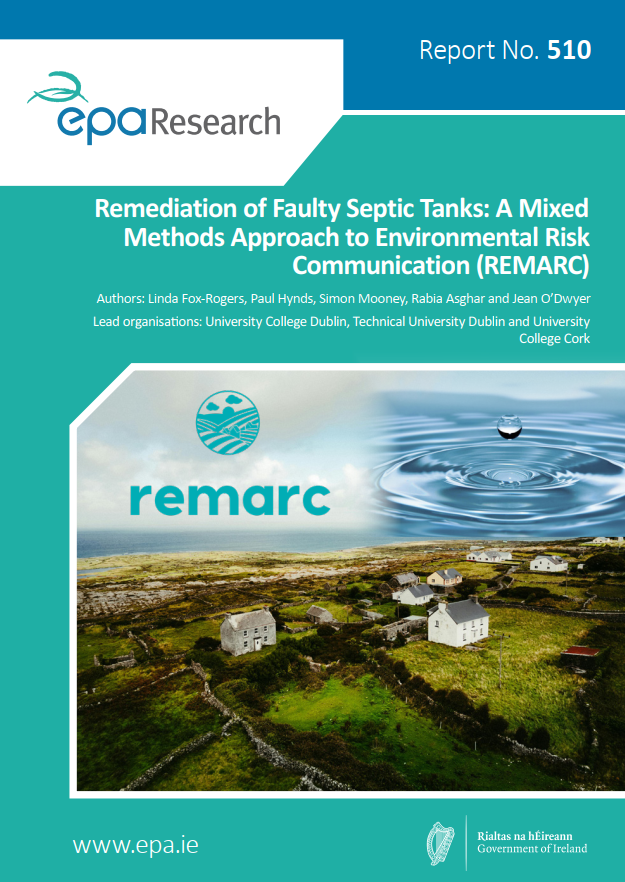
Research 510: Remediation of Faulty Septic Tanks: A Mixed Methods Approach to Environmental Risk Communication (REMARC)
Authors: Linda Fox-Rogers, Paul Hynds, Simon Mooney, Rabia Asghar and Jean O’Dwyer, March 2026
Year: 2026
Approximately 526,000 households in Ireland rely on septic tanks for wastewater treatment. Evidence from the EPA indicates that many Domestic Wastewater Treatment Systems (DWWTS) do not meet required standards resulting in pollution of nearby surface waters and groundwater, posing environmental and public health risks. This research led by UCD, TUD and UCC provides key insights and prescriptive recommendations gathered through a structured suite of multi-modal inquiries spanning top-down and bottom-up DWWTS management perspectives.
Research 509: Consistent and Proportionate Consideration of Health in Strategic Environmental Assessment (Pro-Health SEA)
Authors: Ainhoa González, Tiago Rodrigues, Ben Cave, Thomas B. Fischer, Joanna Purdy, Bianca Van Bavel, Birgitte Fischer-Bonde and Hung Shiu Fung, February 2026
Year: 2026
Strategic environmental assessment (SEA), a mandatory requirement under Directive 2001/42/EC is a framework for formal, systematic evaluation of the likely significant environmental effects of implementing a plan or programme. This research led by a team in UCD reviewed international practice and consulted with health and SEA experts to develop a Health in SEA Toolkit underpinned by a ‘pick and choose’ format to customise for the subject plan or programme. The findings show how to integrate public health into plan-making and ways to strengthen practice by using clear health definitions, assessing direct/indirect health effects and considering inequalities. Applying evidence-based indicators and involving health professionals throughout the SEA process is recommended. Findings inform the proportionate consideration of physical and mental health in SEA. They provide evidence to build capacity and to guide and strengthen health considerations to support EPA, National and EU guidelines.
Research 508: Identification of Effective State of the Art Green Public Procurement Policy and Practice for the Irish Public Sector (GAPS)
Authors: Jamie Goggins, Danuka JPD Anagipura, Thomas Adams, Vincent Carragher , February 2026
Year: 2026
Green Public Procurement (GPP) is acknowledged nationally and at EU level as a key policy lever in improving sustainability. This Green Public Procurement: Analysis and Support (GAPS) project led by a team in University of Galway examined factors that limit public sector uptake of green procurement and developed tools to facilitate its implementation. Using expert surveys, case studies, and workshops, the research found that unclear criteria, limited training, governance constraints and low supplier readiness impede adoption, while standardised criteria, strong mandates, capacity building, and market incentives can drive progress. Key outputs included a carbon footprint calculator covering Scope 1–3 emissions and a searchable GPP case study finder. The findings and recommendations provide a clear pathway for Irish public sector organisations, offering scalable approaches needed to enhance Ireland’s GPP performance.
Research 507: Integrated Strategies to Improve Drinking Water Quality: A Comparative Assessment of Source Protection and Drinking Water Treatment
Authors: Usman Ali Khan, Déborah Sousa, Michael Joyce, Seán Bradshaw and Maebh Grace, February 2026
Year: 2026
Ensuring the safety and sustainability of drinking water sources is mandated under the Water Framework Directive. This research led by a team in Ryan Hanley Consultants Ltd investigated source protection (SP) measures using advanced drinking water treatment technologies (DWT) to improve drinking water in diverse Irish catchments. It examined how site-specific catchment attributes influence the effectiveness of SP and DWT strategies. A multi criteria analysis (MCA), supported by cost assessments and expert input, identified the most suitable combinations of SP and DWT options. The findings suggest that integrated, site specific solutions best achieve regulatory compliance, reduce long term costs and support sustainability. The MCA framework offers policymakers a tool to balance technical, economic and social criteria. It recommends quantitative validation to strengthen its recommendations and public awareness initiatives that encourage behavioural changes to support water protection.
Evidence Synthesis Report 8: Ireland’s Urban Bioeconomy – Opportunities for Climate Action
Authors: Sarah Zimmermann, Nicholas M. Holden and Claire Downey, February 2026
Year: 2026
This study, conducted by the The Rediscovery Centre, highlights opportunities for urban circular bioeconomy development to inform Ireland’s bioeconomy and climate policy updates and bioeconomy strategies.
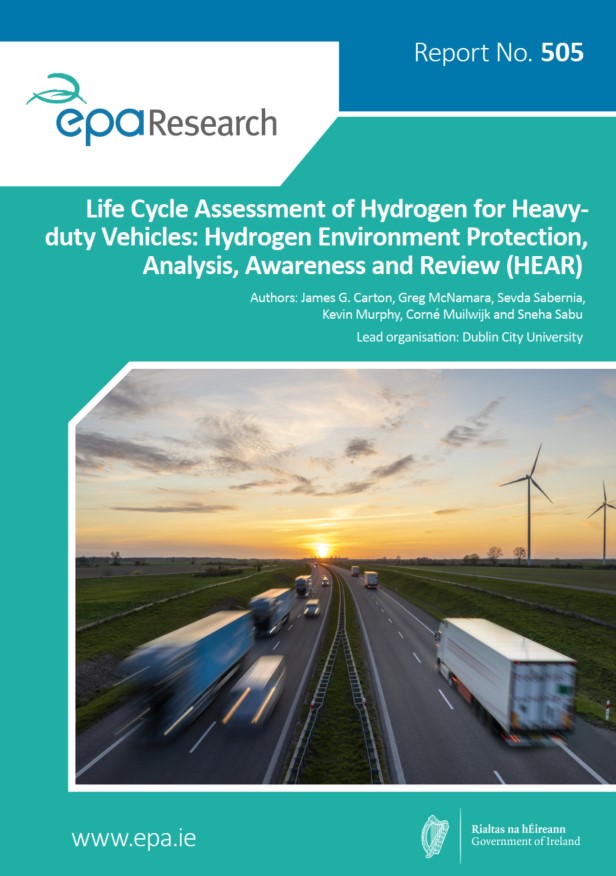
Research 506: Life Cycle Assessment of Hydrogen for Heavy-duty Vehicles: Hydrogen Environment Protection, Analysis, Awareness and Review (HEAR)
Authors: James G. Carton, Greg McNamara, Sevda Sabernia, Kevin Murphy, Corné Muilwijk and Sneha Sabu., January 2026
Year: 2026
Transportation in Ireland accounts for approximately 36% of total energy consumption, using predominantly fossil fuel. The HEAR desk study led by a team in DCU examined hydrogen as a sustainable fuel for heavy-duty vehicles in Ireland to meet Ireland’s fossil fuel reduction commitments. Mobility is essential, but current diesel-based systems pose environmental and health risks. A literature review and life cycle assessment evaluated hydrogen’s environmental impacts across production, transport, and refuelling compared to diesel. Findings show that green hydrogen, produced from renewable energy, is the least harmful option in key impact categories such as climate change and water pollution. The research provides stakeholders with new datasets on hydrogen’s potential role in reducing emissions. Further research is recommended on life cycle costs and hydrogen production pathways which the study notes should also be evaluated from other perspectives.
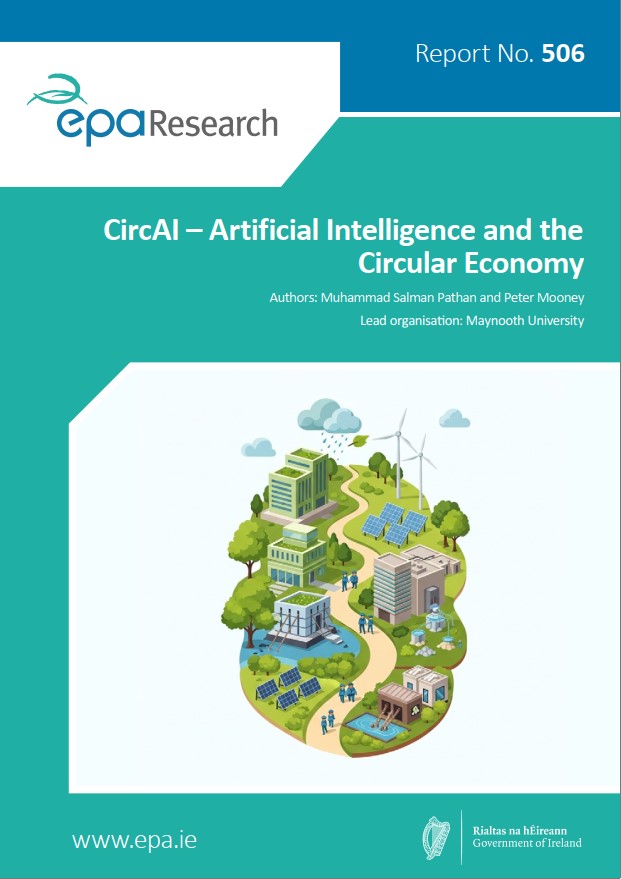
Research 505: CircAI – Artificial Intelligence and the Circular Economy
Authors: Muhammad Salman Pathan and Peter Mooney, January 2026
Year: 2026
Artificial Intelligence (AI) is continually advancing and evolving, offering solutions to address challenges across many sectors of society including waste management and climate change. The Artificial Intelligence and the Circular Economy - CircAI project led by a team in Maynooth University explored how AI can support Ireland’s circular economy (CE). While global best practices show AI’s potential to optimise CE processes, the research highlighted that Irish Small and Medium Enterprises (SMEs) lack familiarity with its benefits and limitations. The findings revealed that use of AI is hindered by insufficient education and training on AI applications and CE principles. The research recommends the need for greater understanding by AI developers to meet stakeholders’ needs, increased funding for AI-driven CE models and financial incentives for SMEs. This could be facilitated by expert-led advisory groups informing policy, increased stakeholder collaboration, and educational platforms.
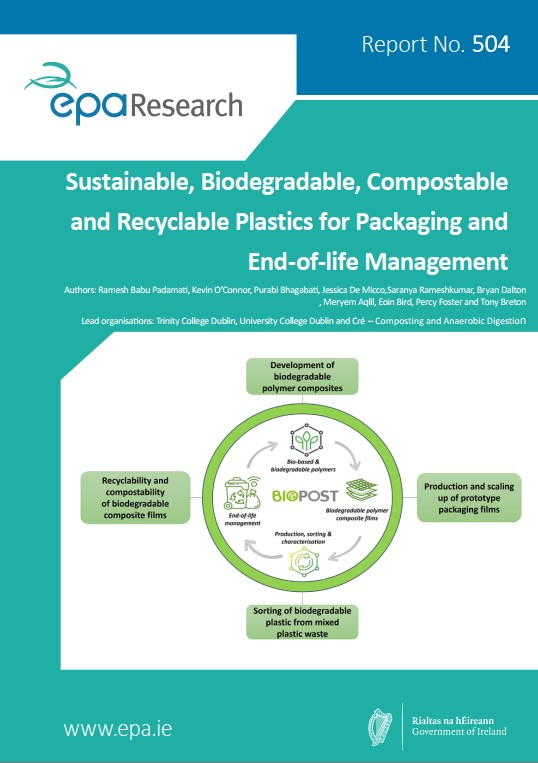
Research 504: Sustainable, Biodegradable, Compostable and Recyclable Plastics for Packaging and End-of-life Management
Authors: Ramesh Babu Padamati, Kevin O’Connor, Purabi Bhagabati, Jessica De Micco, Saranya Rameshkumar, Bryan Dalton, Meryem Aqlil, Eoin Bird, Percy Foster and Tony Breton , January 2026
Year: 2026
In Ireland, plastic waste accounted for nearly 25% of total packaging waste in 2023, with only one-third of this waste recycled. The BioPOST project, led by a team in Trinity College, explored creating biodegradable plastic as sustainable alternatives to support Ireland’s commitment to meet the 55% recycling target by 2030 under the EU Packaging and Packaging Waste Regulation. Testing sorting systems and exploring sustainable recycling options on a pilot scale were also central to the research. Pilot trials achieved 60–90% segregation of biodegradable plastics using optical sorting and demonstrated that most blends were compostable under Irish industrial conditions. Findings show current infrastructural deficits impede effective segregation and recovery and recommend the need for systems for labelling, collection, and recycling to enable bioplastic circularity. Policy actors are provided with feasible options and evidence to produce, sort and recycle biodegradable plastic composites.
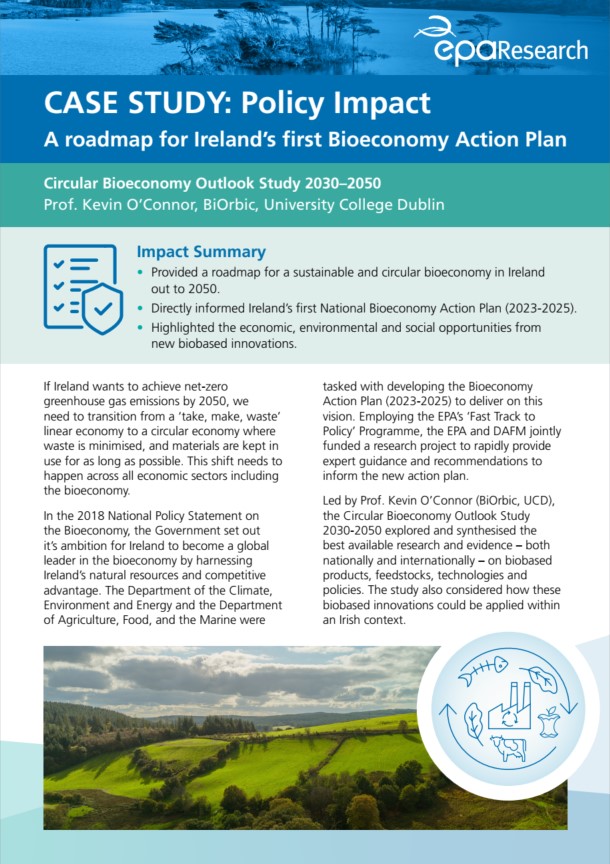
A roadmap for Ireland’s first Bioeconomy Action Plan
Circular Bioeconomy Outlook Study 2030–2050 Prof. Kevin O’Connor, BiOrbic, University College Dublin, December 2025
Year: 2025
Delivered through the EPA’s Fast Track to Policy Programme, and jointly funded with Department of Agriculture, Food and the Marine, this research provided rapid, evidence based insights that played a central role in shaping Ireland’s National Bioeconomy Action Plan ( 2023–2025).
Climate Research in Ireland 2024
The National Environmental Coordination Group (NERCG) supports and promotes coordination and knowledge exchange between state bodies involved in funding Environmental research in Ireland., December 2025
Year: 2025
This report has been prepared by the EPA on behalf of the NERCG to highlight climate and climate-related funding by the members for the previous year.
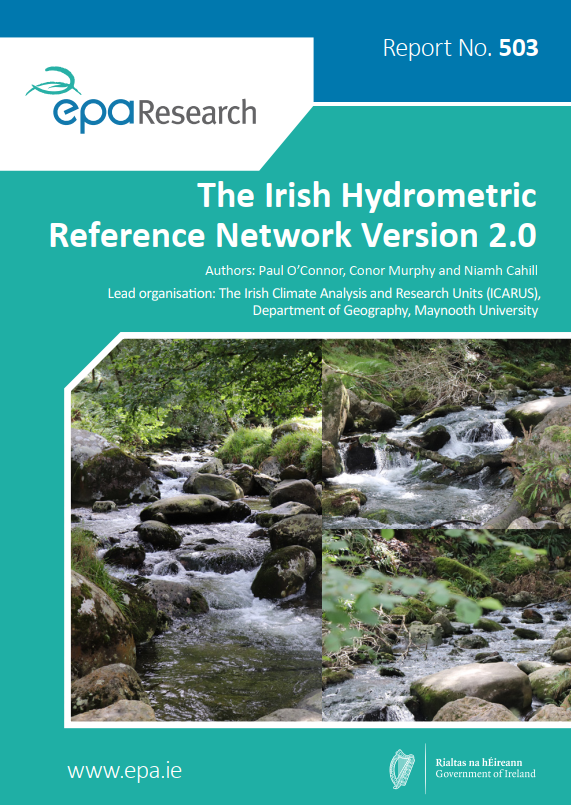
Research 503: The Irish Hydrometric Reference Network Version 2.0
Authors: Paul O’Connor, Conor Murphy and Niamh Cahill, December 2025
Year: 2025
Hydrometric reference networks are crucial for tracking climate variability, hydrological modelling and extreme events. This research, led by a team in Maynooth University, enhanced the Irish Hydrometric Reference Network (IHRN) to better detect climate-driven changes in river flows across Ireland. Building on the EPA HydroDetect project, it adds a key tool for water management and addresses gaps in understanding floods, average flows and droughts. Findings show increasing high and mean flows in winter and decreasing low flows in spring and summer indicating greater flood and drought risks. Long-term reconstructions show stronger seasonal trends and the influence of the North Atlantic Oscillation. The updated IHRN dataset underscores the importance of hydrological modelling, flood risk management and climate resilience planning. The research recommends expanding the network to include groundwater and lakes with coordinated national oversight to ensure Ireland’s hydrological resilience.
Research 502: Mainstreaming Circular Economies Through Collaboration and Co-creation (MainCirc)
Authors: Lisa O’Malley and Maria Lichrou, November 2025
Year: 2025
The Information and Communications Technology (ICT) sector offers high potential for circular practices due to its significant environmental footprint and reliance on critical raw materials. The MainCirc project led by a team in University of Limerick in partnership with Green IT Ltd, an Irish SME, explored how circularity could be mainstreamed through innovative business models, focusing on remanufacturing ICT devices. A key achievement was Green IT’s inclusion in Ireland’s public procurement framework, making Ireland the first EU country to allow remanufactured ICT under its “Buying Greener” strategy. Findings revealed that remanufactured devices offer higher perceived value than refurbished ones, especially for organisational buyers. The project demonstrates the viability of circular ICT through ‘servitisation’ a shift from product to service-based business models and provides evidence-informed insights for sustainable procurement.
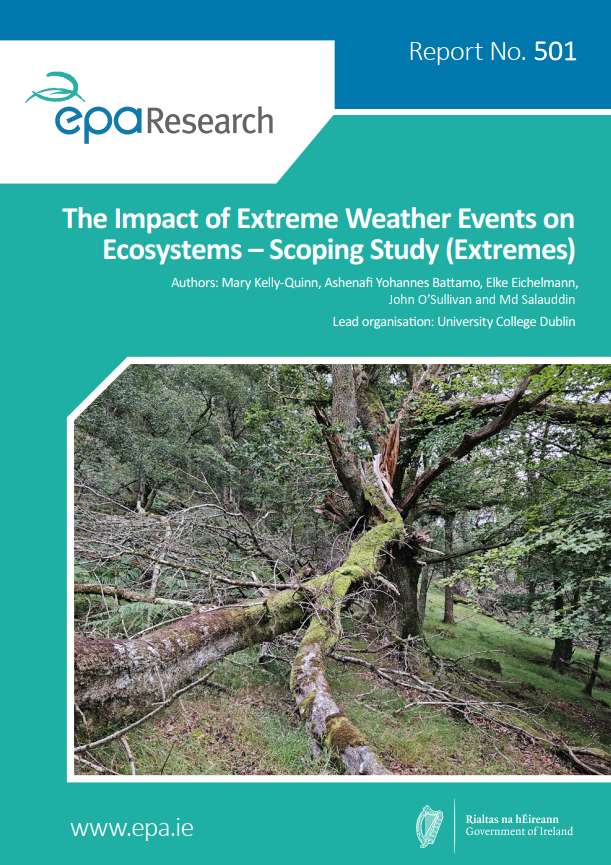
Research 501: The Impact of Extreme Weather Events on Ecosystems – Scoping Study (Extremes)
Authors: Mary Kelly-Quinn, Ashenafi Yohannes Battamo, Elke Eichelmann, John O’Sullivan and Md Salauddin, November 2025
Year: 2025
Evidence of accelerating pressures on ecosystems and biodiversity is mounting, particularly in terms of pollution and habitat fragmentation. This desk-study led by a team from UCD examined the potential impacts of extreme weather events (EWEs) on Ireland’s Special Areas of Conservation and Special Protection Areas. Stakeholder questionnaires highlighted habitat-specific vulnerabilities and varying sensitivities e.g., flooding and heavy rain threaten rivers and uplands; heatwaves affect lakes; droughts endanger fens and turloughs; and wildfires and storms damage forests and grasslands. A vulnerability framework combining exposure, sensitivity, and adaptive capacity tested on Dublin Bay’s Atlantic salt meadow showed potential for national application. Findings provide information to track climate change impacts and mitigate EWE impacts on protected sites It recommends targeted assessments, development of indicators, collection of multi-scale data, and enhancement of monitoring systems.
Research 500: Operationalising Resilience in Climate Action (ORICA)
Authors: Conor Murphy, Miguel Angel Trejo Rangel, Tara Quinn, Róisín Moriarty and Ailbhe Gallagher, November 2025
Year: 2025
Ireland faces growing climate risks, demanding a coordinated and resilient adaptation strategy. The ORICA project led by ICARUS in Maynooth University examined how resilience is defined and implemented across Irish climate policy. While Ireland’s adaptation policies via the National Adaptation Framework (NAF) have evolved to include governance and equity, inconsistent definitions of resilience across policy documents create confusion, hindering alignment and effectiveness in implementation. Local authorities show potential for innovation, integrating nature-based solutions and community involvement. Key challenges include fragmented adaptation governance, limited resources, and unclear resilience targets. To advance, Ireland must unify its resilience definition, strengthen cross-sectoral coordination, shift from planning to action, and embed participatory decision-making processes approaches into adaptation planning.
Research 499: The Role of Irish Small and Medium-sized Enterprises in the Transition to a More Circular Economy
Authors: Bernadette Power, Gordon Sirr, Geraldine Ryan and John Eakins, November 2025
Year: 2025
In support of Ireland's transition to a Circular Economy, the Trans2CirEcon research project conducted by University College Cork explored the role of Irish Small and Medium Enterprises (SMEs). Through surveys of SMEs and consumers, the research found low engagement in the Circular Economy. However, strong interest and willingness to participate in circular business models (CBMs) was identified, indicating a latent demand for Circular Economy products and services. Sectoral differences were noted, with construction, manufacturing, and retail SMEs favouring different CBMs and identifying different barriers and motivators. Consumer engagement with the Circular Economy also varied by product type and socioeconomic status. The research provides policy recommendations and interventions to address systemic barriers, foster innovation and support SME and consumer engagement in the Circular Economy.
Research 498: Indicators of Air Pollution Effects in Ecosystems for Monitoring under the EU National Emission Reduction Commitments Directive
Authors: Thomas Cummins, Lorna Marcham and Keelan McHugh, November 2025
Year: 2025
EU member states are required to continuously monitor the state of ecosystems where negative effects of air pollution may occur, under the National Emission Commitments Directive (NEC). The NEC Indicators project led by a team in UCD reviewed indicators used to detect air pollution effects in sensitive ecosystems like bogs and semi-natural grasslands. It focused on ammonia, mainly from agriculture, and ozone, formed through chemical reactions involving industrial and transport emissions. The findings show that ozone levels are highest near Ireland’s Atlantic coast, decreasing inland and in urban areas due to deposition and chemical reactions. Researchers found that even low nitrogen inputs can significantly alter plant communities. The findings may be used to review and refine monitoring methods in the National Ecosystems Monitoring Network. Development of structures and communication within the monitoring community is encouraged.